The Pentagram

The Pentagram


To me, the pentagram inspires feelings of warmth, awe and joy. It stands for life–the mystery and the balance. The pentagram serves as the universal symbol of the Craft. You can find it in all occult shops and most new age stores. Wiccans tend to wear a pentagram as a pendant on a necklace, a symbol on a ring and more. But what is this symbol and what is the message it really conveys?

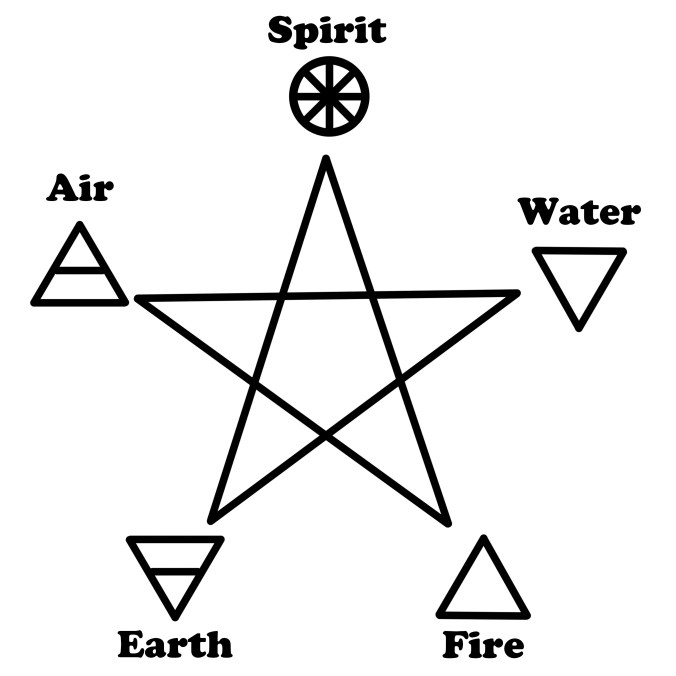
As a five-pointed star, the pentagram represents each element with one of its points. Many people have heard of the elements Air, Fire, Water and Earth. Then what is the “fifth element”? It’s Spirit. Now there’s a bit of controversy because some Wiccans would argue that Spirit is not strictly an element. Nevertheless, all five items are needed and unique.

Air is associated with thought. Thoughts move in and out of our minds just like a light breeze flows through our hair. Thoughts are the beginning of actions, likewise dawn represents the beginning of new things and Wiccans thereby associate Air with dawn. Further, Air relates to the direction East. East is where the sun comes up and begins the day.

Fire is associated with action. Besides keeping us warm it is the spark that gets us into motion. It motivates our will producing results on the physical plane. Fire is also associated with the direction South. Our ancestors (from Europe) understood that going towards the South, the lands were warmer.

Water is associated with emotion which flows through us. Every thought creates feelings. We remember grandma’s cooking and get that warm fuzzy feeling inside, or we remember that fight with our partner that made us so mad! Water is associated with the West, which is associated with crossing the River Styx and going to the land of the dead.

Earth is associated with stability and with its function as the foundation for other things. Earth keeps us stable and often represents the many mundane things that we need in life. Earth represents the physicality of our bodies and the ground we stand upon. Earth’s direction is North and it is represented by mountains, rocks, crystals and such.

Spirit is the unique element that ties the rest together. It is our spirit that the Gods have given us, which makes us alive. You cannot have life without the other four. We need air to breathe, fire to keep us warm, and water to drink. We need the physicality of our bodies (represented as Earth) to interact with our surroundings. But we cannot truly be us without spirit. What is a soul? It is a piece of the Gods that they place within all that is alive. This soul animates our Air, Fire, Water, and Earth into a living being.

Spirit is a crucial element that is too often overlooked. Because Spirit is the miracle of life itself. We are the pentacle. We are life.

Blessed Be,

Moonwater SilverClaw

What is a Magick Circle?

Stone Circle

Stone Circle

A witches’ magick circle is one we create out of energy. We set up this circle, or “cast a circle,” before any spell or ritual. By the way, we apply the label “a working” to any spell or ritual.

Here are reasons we use a magick circle:

  1. To hold all the energy that we create, we use a circle to contain all the energy we raise within it. Therefore, no energy dissipates before we can use it.
  1. As a sacred space, the circle functions as a temple to worship the gods in.
  1. The circle moves us between the mundane world and the realms of the gods, so that we may communicate with them easier.
  1. The most important thing that a circle does is function as a protection or barrier from unwanted entities that may want to “feed” off the energy we have raised.

When do we raise a circle? For rituals, meditation or handfasting ceremonies (Wiccan marriages). You always close your circle when you are done with it. If you leave it up the energy will eventually become unstable and will become dangerous.

A circle forms our sacred space for doing our workings. We can set up our circle as our temple wherever we find ourselves in the world.

Blessed Be,

Moonwater Silverclaw

The Tools of Wicca: Candles

Merry Meet. Let’s talk about candles.

Candles

Candles

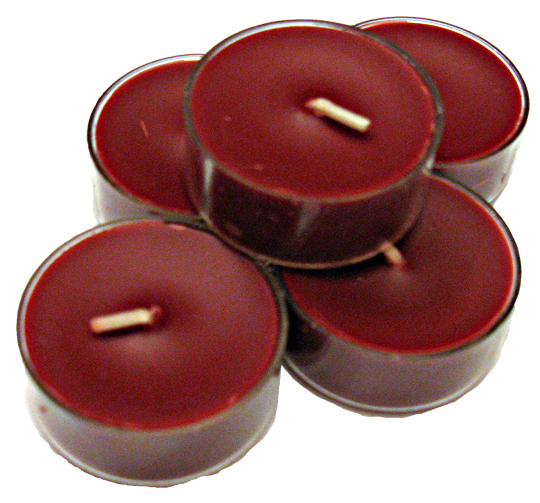
From tea lights to tapers, Wiccans use candles for many purposes including: calling the four quarters, using them for spells, and lighting the sacred space.

I use tea lights for the quarter candles. What are the quarters? They’re the four compass directions in a circle. Each quarter has specific attributes and entities that dwell in a particular direction.

Each of the quarters (compass directions) has its own candle to honor the beings when we call them to our circle.

Taper Candle

Taper Candle

Consider using taper candles for the God and Goddess candles, which honor the God and Goddess.

On my altar, I use a votive candle for the working candle, which has two functions: a representation for the element fire and a source for lighting all other candles, incense or other objects that need to be burned.

Use your working candle for only one purpose. You’ll notice that all candles tend to only serve one function. Wiccans use quarter candles for the quarters. They choose one candle for the God and then use that particular candle for all subsequent rituals. The same is true for choosing a candle for the Goddess.

Wiccans use candles in spells, too. When doing candle magick, the type of candle and the color of the candle are important. We will discuss candle magick in another post.

Candles provide lighting, too. You can use any type of candle you want for this purpose.

A note on using scented candles. Use scented candles to incorporate aromatherapy into your magick, if you like. Different scents bring up powerful emotions, which is great when focusing on a particular task. Avoid using them for any other purpose.

I wouldn’t mix scents by burning multiple scented candles at the same time. They will mix, giving you unpredictable results. If you are mixing oil to scent a candle try to keep it simple at first until you become familiar with the different results you get with each scent. Then you can slowly mix scents to see what results you get. Be sure to take notes.

Blessed be,

Moonwater Silverclaw

Tools of Wicca: The Wand

Merry meet and welcome!

So far we have seen the athame, cup, water, salt, fire, and incense representing the element air. Now let’s talk about the wand.

Wand

The Wand

Wands come in just about any shape, from strait to bendy like a twisted tree branch.  People form wands out of almost anything from stone to various forms of wood–and even metal. We may wield a wand formed with a combination of these materials.

As a masculine tool, the wand functions much like the athame. But where the athame is  a forceful tool, the wand is gentler and softer in its approach. You use the wand, like the athame, to direct energy from you to a thing or place. You can direct energy to a candle, a person, and in some cases, you can cast circle with the wand. I feel the athame is a much better tool for casting circle though; it gives you much more protection than the wand.

Sometimes, Wiccans use a wand, instead of the athame, for handfasting (Wiccan marriage). Using the wand makes the circle semi-permeable, which allows small children to go through the boundary without too much disturbance to the circle itself. The wand brings a softer energy, which is nice for this type of ceremony.

In our next post we will talk about the different candles Wiccans use.

Blessed be,

Moonwater Silverclaw

The Tools of Wicca: Incense

Merry meet and welcome!

We talked about salt in the last post. Now we will talk about air.

Incense

Incense

Incense represents air when burned, and is the last of the four elements represented on our altar. We burn incense in an incense burner, which we will also talk about in this post.

There are many types of incense which we will discuss in later posts. But three main forms include raw, cones, and stick incense. You have a choice of various burners, used for burning each different type of incense. Incense has these forms:

  1. Cones – You can use a specific type of burner specifically made for cones, or you can use a generic fireproof container. Fill it with sand or small stones. Such a fireproof container can be used with all types of incense.
  1. Sticks – Sticks have specific burners, usually with a hole at one end. You can slide the bare end of the stick into the hole, while the coated end remains visible. Tending to be long in shape, these burners catch the ash of the incense as the stick burns.
  1. Raw – Raw incense usually comes as a form of resin, but not always. Myrrh and Frankincense are well-known resin incense. You need charcoal to burn resin incense, and you can pick up some at your local metaphysical shop. The charcoal usually comes in a round tube shaped package. Each piece of charcoal looks like a round pad with a indent for the raw incense. Raw incense should be burned in a fireproof bowl or a cauldron. Be sure to fill the container with sand or small stones. Then place the charcoal on top of the sand and light the charcoal. Now wait until the whole charcoal piece smolders. Then carefully drop the incense on it.

Now back to air, which is a masculine element. We combine our incense with the other masculine element, fire, to create the smoke that represents air. This incense smoke is then used to charge and bless things and people. Each element on the altar proceeds to be  blessed and combined with the sibling element. Add feminine salt with feminine water. Apply masculine fire to masculine incense to create smoke. The process is you cleans with salt and water, and you charge with fire and incense. Both are utilized at the beginning of our rituals, to help clear the mundane space to make way for sacred space.

Now we’ve completed our discussion of the elements that we use on our altar. But we are not done. There are still other tools to discuss. Next will be the wand.

Blessed be,

Moonwater Silverclaw

The Tools of Wicca: Salt

Merry Meet!

We talked about fire in my last post, today we will be talking about salt.

Salt Bowl

Salt Bowl

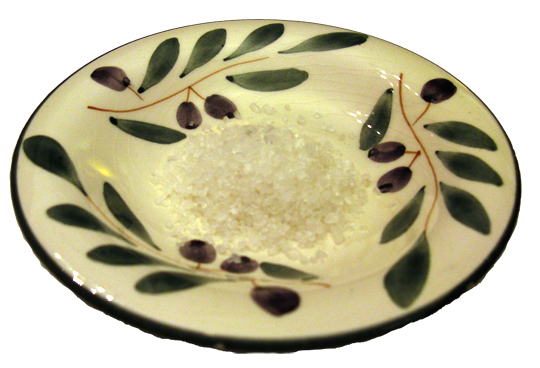
We use salt to represent Earth on our altars. Salt is sodium crystals, and crystals represent Earth. Therefore, Wiccans see salt as feminine.

We balance our altars with salt as Earth energy. As mentioned in a previous post, we also mix salt with water to make our holy water. Salt is a natural cleanser and preserver.

Our ancestors applied salt to cure their meat and it functioned as the first preservative people employed. (And we still use it today.) Early people didn’t understand it at the time, but salt kills a lot of bacteria we come into contact with and so it prevented meat from spoiling.

So holy water purifies because it has salt in it. We sprinkle holy water to get rid of unwanted energies and entities. We mix three pinches of salt into our blessed water to make a salt-water solution. This blessed solution is then used to bless and cleanse other things and even people.

So this is how we use salt on our altar.

In the next post we will talk about air.

I wish you a blessed day.

Blessed be,

Moonwater Silverclaw

The Tools of Wicca: The Working Candle

In the last post we talked about water and what it represents. Now we will continue with fire.

Working Candle

Working Candle (photo by Arthur)

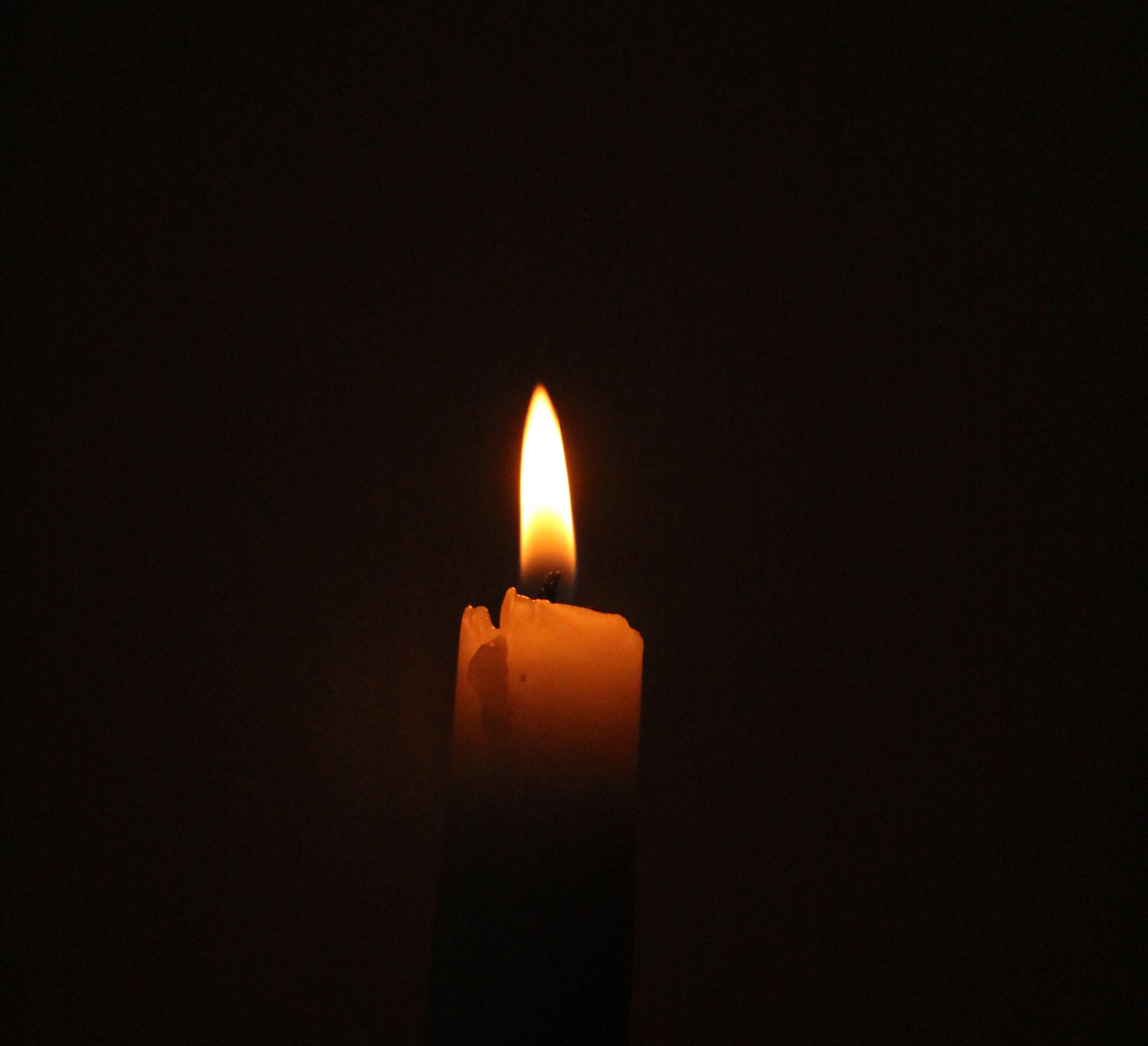
Fire is the spark of life! As a masculine element, fire is included as the flame of the lit candle on our altar. We light this candle, known as “the working candle,” first. Then we use the working candle to light other objects such as incense or other candles. The other candles have their own specific uses, and we do not work with their flames.

In the next post we will be discussing salt. So see you next time.

Blessed be,

Moonwater Silverclaw

Tools of Wicca – Water

Merry Meet.

In the last post we looked at the cup and its use. Now we will look at water.

Bowl of Water

Bowl of Water

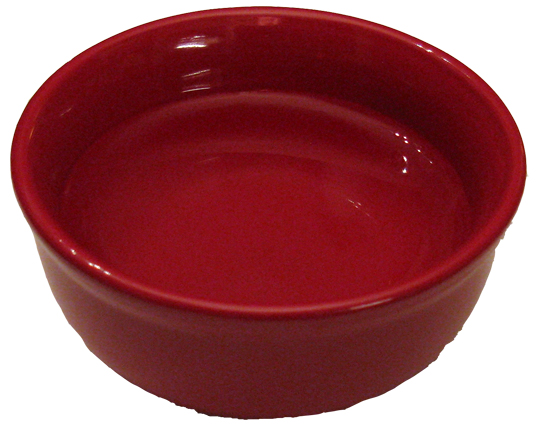
Water is one of the four elements on our altar. As a feminine element, water represents the embryonic fluid of birth. It represents not only birth but also death–in the cycle of life. Both Death and water are associated with the West, which in turn is associated with the Summerlands. People of many cultures think of the afterlife and the need to cross water in some fashion to go the other side.

We use the water in conjunction with blessed salt to make our holy water. In turn, we use this holy water to cleanse objects and people. Holy water represents the salinity of the oceans and of the womb we all come from.

In the next post, I will discuss fire and its properties.

Blessed be,

Moonwater Silverclaw

The Tools of Wicca: The Cup or Chalice

Merry Meet and welcome. Last time we talked about the athame. Today we will talk about the chalice or cup.

The Cup

The Cup

The cup is an important tool, and it can be made of just about anything. Glass, metal, or even wood. Since plastic usually does not hold a magickal charge, we tend to avoid using that material. (I spell magick with a “k” at the end to distinguish it from stage magic which is just slight of hand.

Usually we pour wine into the cup, but, you can substitute juice if you do not drink alcohol. Some people are allergic to alcohol or simply choose not to drink it and that is fine.

After we’ve poured wine in the cup, we use a ceremony to bless it. After that, we pour a portion of wine into a small bowl as a libation to the Gods. We then exclaim, “To the Gods.” After that, we drink the wine from the cup.

If your ceremony includes more than one person, (if you’re not practicing as a solitary), the cup is passed from one person to another while saying: “May you never thirst.” The person, who receives the cup, replies, “Blessed be.”

In my next post, I will discus the water bowl. Hope you have a great day!

Blessed Be,

Moonwater Silverclaw

The Tools of Wicca: The Athame

Merry Meet. In my last post we discussed a little about what Wicca is. Now, lets discuss how it is practiced.

How do I practice Wicca?

We as Wiccans attune ourselves to the seasons and use the Sabbats as one of those tools to help us do so. I will be discussing the Sabbats later. I think you should know about the tools first, so let’s talk about the tools we use to help us practice the craft. We will start with the athame.

Tools

The Athame

The Athame

One of the most used tools in Wicca, the athame is a ritual dagger that we use to channel and direct energy. It is used to bless and consecrate other tools, such as the elements on our altar, which we will also discuss later.

The athame (as you can see above) usually has a black handle. It has a double edged blade. One of the most important things about the athame is that it is NOT used to cut physical objects. You never cut physical objects with it. That is what the boline is used for. We will discuss the boline later, too.

The athatme is used to channel the energy you raise to where you need it to go. This could be sending energy to bless something or in some cases even casting a circle. However some covens use the sword for that purpose. Yes, some Wiccans use a sword in their rites. The sword is just like a large athame.

The athame is generally held in your dominant hand, because, this is usually the hand most people use to “push” energy out of. So pushing the energy out and directing it with the athame is the natural next step. Each tool can either represent the masculine or the feminine. The athame is a masculine tool.

In the next post I will discuss the cup or chalice.

Blessed be

Moonwater Silverclaw