The Element Air

Air

Clouds Represent Air

Air

Associated with the direction East, air is a masculine element. Air represents the flowing thoughts of our minds. We take in new thoughts like we take in a new breath into our lungs. Air goes hand in hand with fire, which is also a masculine element. Without the air (specifically oxygen) to support it, fire dies.

What is the elemental of air? It’s the sylph, often depicted as a human figure sporting wings. Numerous people report seeing Sylphs in cloud formations.

Representations of Air include feathers, birds of all kinds, clouds, dust devils, wind chimes, and incense smoke. Any of these items can be placed in the East quarter of your circle. Be creative.

Blessed Be,

Moonwater SilverClaw

The Element Earth

Rocks

Rocks are a Representation of Earth

Earth

As a feminine element, Earth is the provider of sustenance for her children, just as a mother nurses her infant. Earth represents fertility and abundance.

Represented as the North, Earth stands for stillness and our foundation. We stand on rock, but more than that, metaphorically Earth is a foundation of our spirit.

Earth also represents the fertile soil from which life springs. In the cycle of life, Earth is also the silent tomb where we return to rest until we are reborn.

As we learn more about Wicca, we discover that there are elementals associated with each element. For example, strong and squat gnomes are Earth’s elementals. Their skin reveals the colors of the earth, in many shades of brown and black.

Finally, on our altar, we can use rocks, crystals, dirt, and fossils to represent Earth.

Blessed Be

Moonwater SilverClaw

Halloween: The New American Export

Halloween: The New American Export

By Heather Greene

Before we move too far into the future, let’s pause a moment to talk about Halloween. Not the spiritual vigil of Samhain or seasonal harvest celebrations.  Let’s discuss the wholly secular, American and Canadian holiday of Halloween, complete with candy, costumes and PVC pumpkins.

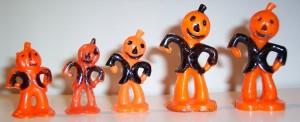
Vintage Plastic Halloween Pumpkin Men by riptheskull

Vintage Plastic Halloween Pumpkin Men by riptheskull

It’s fair to say that Halloween has a somewhat uneasy place in the family of North American holidays.  On the one hand, we, as Pagans, fully embrace the festivities. It is the one calendar event that openly clings to its Pagan origins. When else can you buy a pentacle in TJ Maxx?   But, on the other hand, the celebration mocks its own spiritual roots, something that we hold very dear.

We aren’t alone in our unsettled attempts to navigate through the Halloween season.  American religious and community leaders repeatedly attempt to ban the holiday.  Why?  The list is endless including concerns over the overindulgence in candy, the potential dangers of trick-or-treating, the increased popularity of over-sexualized or violently graphic costumes and, of course, its Pagan origins. But the majority of folks really just want an excuse to party. Halloween provides a unique canvas that can only be topped by the decadent bacchanalia that is Mardi Gras. (The Atlantic, 10-30-12)

Ronald McDonalds Girls Photo courtesy of Japan-Talk.com

Ronald McDonalds Girls
Photo courtesy of Japan-Talk.com

More recently, the Halloween debate has been getting larger – much larger. Over the past two decades, our secular holiday has been spreading across the globe, seizing the imaginations of youth cultures on every continent. The holiday has hitched a ride with missionaries, English language teachers and ex-pats. It’s being promoted by imported American cultural commodities like internationally-based Theme Parks, McDonald’s stores, Coca Colaproducts and Hollywood movies.  And, of course, the ever-increasing accessibility to the internet only fuels the proverbial fire.

In some regions, Halloween has been readily incorporated into long-established fall cultural traditions. In the U.K. and the Republic of Ireland, Halloween finds itself at its ancestral birthplace. Today, the newly-imported version has mixed with surviving local customs associated with, among others, Guy Fawkes Day.  As noted by English writer, Chris Bitcher:

“Trick or treat has now actually become a bona fide tradition in the UK ….Fireworks were our autumnal treat of choice and for a good little while we fought off any competitor to it. But then we gave that up and decided to embrace both.” (Your Canterbury)

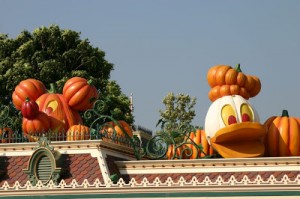
Disneyland Honk Kong During Halloween

Disneyland Hong Kong
During Halloween

Across the globe in China, Hong Kong and Japan, people have been enthusiastically adopting the holiday. Lisa Morton, award-winning writer of Trick or Treat: The History of Halloween, and noted Halloween authority, attributes this acceptance to the presence of two Disney Theme Parks  (Tokyo and Hong Kong), Hollywood horror movies and a fascination with American pop-culture. During my own discussion with her, Lisa added, “In Japan, there is a love of festivals and affection for costuming or “cosplay,” which is associated with anime and manga.”  In mainland China, Halloween is slowly replacing Yue Laan or “ Hungry Ghost Festivals,” during which people appease and entertain ancestral ghosts.  To fuel and solidify this cultural shift, China will be getting its very own “Haunted Mansion” at Shanghai Disneyland in 2015.

On the contrary, in continental Europe, Halloween has been receiving a less than welcome reception. In Oct 2012, the Polish Archbishop Andzej Dzięga, was quoted on Polskie Radio, as saying, “This kind of fun, tempting children [with] candy, poses the real possibility of great spiritual damage, even destroying spiritual life.” He warned against the “promotion of paganism” and a “culture of death.”  In 2003, CNN.com reported that France’s Catholics are trying everything to fend off a Halloween celebration they say is an “ungodly U.S. import.”

More recently, in Russia, the war over Halloween rages on. ABC Online reports that one Russian Education Ministry official called the holiday, a destructive influence “on young people’s morals and mental health.” The Moscow city schools banned Halloween celebrations claiming that they were concerned about, “rituals of Satanically-oriented religious sects and… the promotion of the cult of death.”  In the same article, an unamed Russian psychologist warned:

Halloween poses a great danger to children and their mental health, suggesting it could make young people more likely to commit suicide.”(ABC Online)

Despite this heavily Christian rhetoric, the resistance is not entirely about religion.  In our discussion, Lisa explained that, “While it is difficult to fully separate the expression of nationalism from religious tradition, many European countries, like France and Slovenia, have strong anti-American undercurrents.”  Religious fervor may, in fact, be serving nationalist interests.  Lisa said, in the end, she “believes the protests are far more about nationalism than religion.”

This is expressed in an article by Paul Wood, an Englishman living in Bucharest:

Just as the North American grey squirrel has made the red squirrel almost extinct so has the North American Hallowe’en taken over with extraordinary swiftness, extinguishing older, weaker traditions. This too is life, I suppose, but it is part of the process by which the whole world is becoming plastic. (Romania Insider)

Despite the rejection, Halloween is still growing, albeit very slowly, deep within European youth cultures.  In Italy, Halloween is called La Notte delle Streghe or “Night of the Witches.”  In Romania, home of the Carpathian Mountains, the local economy is profiting from world’s fascination with Count Dracula. What a better way to spend Halloween than in Transylvania on a “real Dracula Halloween tour” complete with a four-course dinner and prizes!

Now, let’s move into the Southern Hemisphere where Halloween faces a new obstacle. Simply put, the harvest-based holiday does not apply. In this part of the world, October 31st marks the middle of Spring, not Fall.  Over the summer, I was reminded of this fact when wishing an Australian friend, “Joyous Lughnasah.” She responded with an equally joyful, “Happy Imbolc.”

Jack-O-Lantern

Jack-O-Lantern

In the Southern Hemisphere, traditional festivals continue to be celebrated in accordance with appropriate seasonal shifts with no noticeable attempt to transplant Halloween to May.  However, youth cultures have been showing a small amount of interest in an October-based Halloween celebration, particularly in the English-speaking countries of Australia, South Africa and New Zealand.  If for no other reason, the Northern holiday offers a chance to party and dabble in the macabre – even if it’s completely devoid of its seasonal aspects.

What about the Americas?  As noted above, the countries in the Southern Hemisphere do not recognize Halloween chiefly due to geographical complications.  However, the closer you get to the U.S., the more our secular Halloween has influenced local October traditions.  In Costa Rica, for example, locals “have taken this “foreign” holiday and used it to revive an ancient Costa Rican custom: Dia de la Mascarada Tradicional Costarricense or Masquerade Day,” reports the Costa Rican News.

Closer to home, in Mexico, the famous and mystical celebration of Dias de los Muertos is, now, often called Dias de las Brujas or “Day of the Witches.”  Halloween practices have been woven in to this largely religious holiday.  As expected, there has been backlash from Mexican nationalists and religious leaders.  However, Mexico is just too close to the U.S. to prevent the blending of two very similar October holidays. And that continues to happen in both directions.

Just as Halloween has infiltrated Mexican culture, elements of Dias de los Muertos are now showing up within U.S. Halloween celebrations.  In an interview, Lisa Morton explained:

Last year I saw my first piece of major Dias de los Muertos American retailing – the Russell Stover candy company released several themed candy bars… That’s probably a sign that Dias de los Muertos is starting to be accepted into the American mainstream. It’s certainly very popular in those areas of the U.S. with large Latino populations.  More people seem to be joining in large-scale Dias de los Muertos celebrations in America every year.
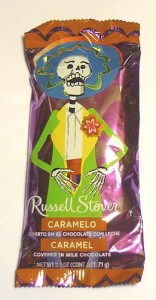
Dias de los Muertos Candy Photo Courtesy of Lisa Morton

Dias de los Muertos Candy
Photo Courtesy of Lisa Morton

There are some areas of the world in which Halloween has yet to find a home for reasons already listed. These areas include the Islamic Middle East, the heavily Christian areas of sub-Saharan Africa, Israel, India and parts of South East Asia.  I’ll go out on a limb and add Antarctica to that list – just to complete the geography lesson.

What does all this mean for Pagans? First of all, in every article for or against Halloween, a discourse emerges surrounding the origins the holiday.  In many of these reports, the author includes a reasonable account of Halloween’s Celtic origins and Samhain-based traditions. Modern Pagan language is, unwittingly, hitching a ride on Halloween’s broomstick.

With the growing public interest in Halloween, we may find ourselves more able to openly join in the global conversation and, at the same time, deal with our own reservations. Maybe we should embrace the evolving holiday, “seize the spotlight” and become the stewards of Halloween worldwide?  After all, the U.S. media loves interviewing witches in October.  Or, we could completely renounce the secular holiday and its derogatory effigies. We could join others in protest with slogans like “We’re a culture. Not a costume.”

Regardless of our personal feelings about the secular celebration, Halloween continues to gain popularity worldwide, year after year.  As a result, every October when the veil thins, a brand-new door opens for us providing a unique opportunity for a teachable moment.  Now, we can say that both the ancestors and the world are listening.

Trick or Treat:  A History of Halloween

Trick or Treat: A History of Halloween

Note about Lisa Morton: Trick or Treat:  A History of Halloween. This book is an historical and cultural survay of Halloween’s evolution from early Celtic traditions and lore through the ages and across the globe. It is a good read for history junkies, like myself, or students of comparative culture. Within her detailed work, Lisa did reach out to consult Wiccans, world-wide, and gave a decent nod to the modern-day Pagan spiritual celebrations of Samhain or Halloween. 


A big thank you to Heather Greene, as she is our first guest blogger.

Heather Greene

Heather Greene

Heather Greene: (Miraselena) is a freelance writer and digital media marketing consultant living in the South Eastern, U.S.  She has an advanced degree in Film Theory and History and a extensive background in commercial media and technology.  She spent the first part of her career working at a major Madison Avenue Ad agency and its subsidiaries, as well as several other corporations.   In 2001, she left it all behind to become a independent writer and has been doing that ever since.

In the Pagan world, Heather has served as Public Information Officer for Dogwood Local Council, the southern branch of Covenant of the Goddess.  In November of 2012, she will become the National Public Information Officer for the organization.  Additionally, she assists Lady Liberty League, as a media relations adviser and writer, for cases involving threats to religious freedom in southern public schools. Her reports have been published on-line and in Circle Magazine. She’s a Priestess with the Temple of the Rising Phoenix, which has been her spiritual home since 1997.
Heather’s other interesst fall into the realm of the creative.  She has always “found peace while dabbling in the creative energy that always seems to encircle her life through music, dance, color and words.” Currently, she is entertaining the muse through her own writing and through music as a singer and songwriter. She finds “power and inspiration in all that is reflected in nature’s beauty, family and friends.”
Twitter:  @miraselena01
Facebook:  Miraselena01
Google +: Heather Greene

The Wiccan Altar

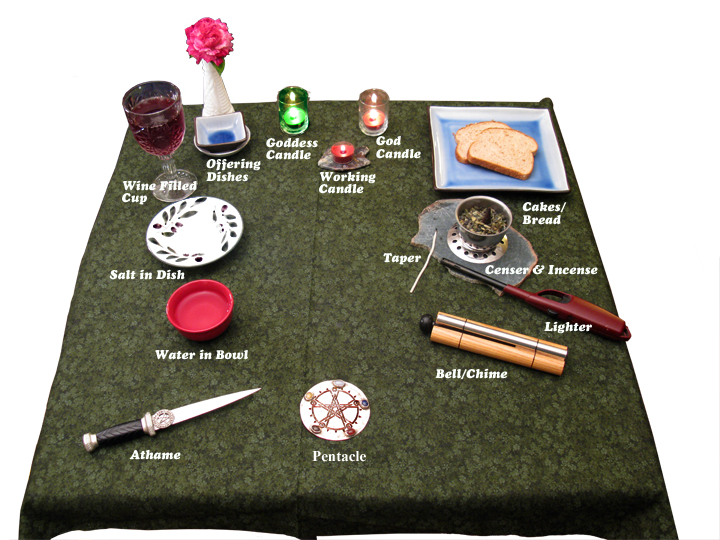
An Example of a Wiccan Altar

An Example of a Wiccan Altar

When I first started to learn from my mentor, it took me forever to remember where everything went on my altar. I would feel self-conscious about making mistakes. My mentor smiled and simply moved the item I had misplaced to where it should reside on the altar. So don’t beat yourself up if you need to use this picture for a while.

There are about just as many ways to set up an altar as there are people. Each person or group may have a certain way of doing an altar setup. Here’s an example of a Wiccan altar. Let’s start with the right side of the Altar.

  • As you can see at the top right is the “Cakes/Bread” You can use bread, cupcakes, cookies or a power bar for that matter. It should contain carbohydrates to nourish the body to replenish the energy you used during ritual.
  • Below that you can see the “Censer & Incense“. This incense burner has cone incense inside it. However, you can burn any kind of incense in this burner. Remember that incense, when burned, represents air on your altar.
  • You can see the “Taper (a long wick),” which is used to help light the candles. You light everything from the working candle. You can use the Taper to transfer the flame to another candle to light it.
  • To the right is the “Lighter” which is used to light the working candle.
  • Below that is the “Bell/Chime” that you use for ringing, when appropriate.
  • Continuing around in a clockwise direction is the “Pentacle”. You use the pentacle to help you focus your attention on your goal.
  • To the left of the pentacle is the “Athame” used to cast circle and to direct power.
  • Above the athame is the “Water in Bowl.” Water is one of the four elements and is used with the salt to make your holy water.
  • Continuing around we have the “Salt in Dish“. Representing Earth, Salt is put into the water.
  • Above the salt is the “Wine Filled Cup”. The cup as you remember is a female symbol and holds the wine/juice to be blessed.
  • Above this are the “Offering Dishes.”
  • Next you see in the middle the “Goddess Candle” and the “God Candle,” which are used to represent the deities.
  • Between the God and Goddess candles, find the “Working Candle,” which you use to light everything else during ritual. The Working Candle represents fire on your altar.
  • And flowers are always a nice touch for nature and the goddess.

We will discuss more on how to use an altar later. Have a great week!

Blessed Be,

Moonwater SilverClaw

Happy Wiccan New Year!

Gourds

Happy Wiccan New Year

Merry Meet and Welcome,


Happy New Year


Why do witches celebrate Samhain as the New Year? And, have you ever wondered why the witches’ New Year is on November 1st, but we start to celebrate on the night before? The Celts remain the source of these traditions.

Wiccans, as well as the Celts, see death as both an end and a beginning. It’s part of the cycle of life. At Samhain, the vegetation god willingly sacrifices himself; and with his death the old year dies, too. The New Year begins at the time of the old year’s death.

In the old days, the people saw the vegetation god in the cycle of the growing plants. The growing cycle consists of sowing seeds, letting crops grow, and finishing with the last harvest and related festival, Samhain. Since no harvesting was done after Samhain, that meant the next day (November 1st) was the new year.

Why do we start celebrating the day before the actual holiday then?  Because the Celts believed a new day started when the sun set, and not when the sun rose on the next day. So we start celebrating (to us) the night before. In the olden times they would start celebrating at sun down through to sun down the next day. Now that’s some party!


So Happy Wiccan New Year!


Blessed Be,

Moonwater SilverClaw

Offerings

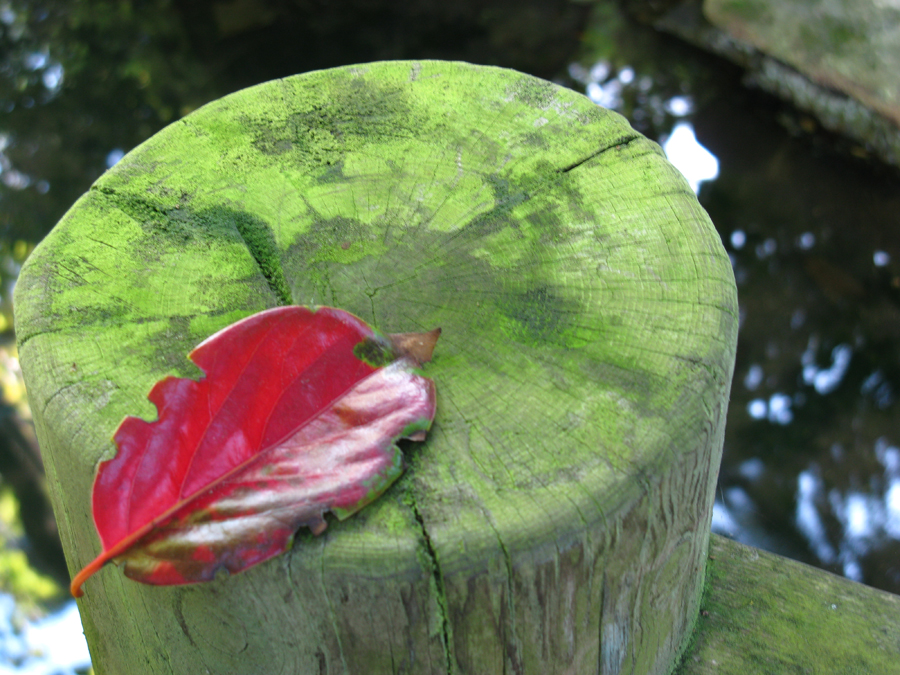
Leaf Offering

Leaf Offering

Offerings

Why do we give “offerings” to our Gods and what is an offering. When we ask the Gods for their help, and we receive it, we offer them thanks through offerings; so an offering is our way of saying thank you for the Gods’ help.

Now what is an offering? Offerings are things we sacrifice up to the Gods in thanks for their help.

Offerings can be things like:

I find the more I say “thank you” with an offering, the Gods really appreciate the gesture, after giving an offering, good luck often finds me. I have even made offerings just to show them how appreciative I am of all they do for me. Just because.

So how do I make the offering? Take (for example) a candle and state the name of the deity and why you are offering up the candle to him/her.

Here is an example of what you can say:

Squat, I thank you for the parking spot you gave me! I honor you with this candle.”

Then light the candle making sure to burn it all the way down.

This also helps us create a stronger bond with our Gods.

Offerings, Gratitude and Good News

Many of you have noticed the donation button on the sidebar of the blog. This button is there to help me keep this blog the Hidden Children of the Goddess going. It pays for helping keep the ads off the blog and maintenance fees, and recover registration fees.

Offerings, donations and gifts are an uplifting way to participate in life and in our community. Well, good news has come. Arthur has donated funds so we will be free of ads for one whole year. So I put out a big thank you to Arthur! I know a number of people who feel good when they are kind and helpful to another person or cause outside themselves. Helping others by being of service is why I blog. I am grateful to Arthur for his wonderful donation to help us and to help me continue my service.

Wondering how to donate to this blog? All you have to do is click the donate button on the sidebar and you can enter in any amount you like. It’s that simple, and it really helps the site.

Again, thank you Arthur!

Blessed Be,

Moonwater Silverclaw

The Tools of Wicca: Candles

Merry Meet. Let’s talk about candles.

Candles

Candles

From tea lights to tapers, Wiccans use candles for many purposes including: calling the four quarters, using them for spells, and lighting the sacred space.

I use tea lights for the quarter candles. What are the quarters? They’re the four compass directions in a circle. Each quarter has specific attributes and entities that dwell in a particular direction.

Each of the quarters (compass directions) has its own candle to honor the beings when we call them to our circle.

Taper Candle

Taper Candle

Consider using taper candles for the God and Goddess candles, which honor the God and Goddess.

On my altar, I use a votive candle for the working candle, which has two functions: a representation for the element fire and a source for lighting all other candles, incense or other objects that need to be burned.

Use your working candle for only one purpose. You’ll notice that all candles tend to only serve one function. Wiccans use quarter candles for the quarters. They choose one candle for the God and then use that particular candle for all subsequent rituals. The same is true for choosing a candle for the Goddess.

Wiccans use candles in spells, too. When doing candle magick, the type of candle and the color of the candle are important. We will discuss candle magick in another post.

Candles provide lighting, too. You can use any type of candle you want for this purpose.

A note on using scented candles. Use scented candles to incorporate aromatherapy into your magick, if you like. Different scents bring up powerful emotions, which is great when focusing on a particular task. Avoid using them for any other purpose.

I wouldn’t mix scents by burning multiple scented candles at the same time. They will mix, giving you unpredictable results. If you are mixing oil to scent a candle try to keep it simple at first until you become familiar with the different results you get with each scent. Then you can slowly mix scents to see what results you get. Be sure to take notes.

Blessed be,

Moonwater Silverclaw

Squat the Parking Goddess

Car in parting spot

Need To Find a Parking Spot?

All hale the Goddess Squat! Please tell me you know Squat. If you don’t know Squat, you should.

Squat is the Parking Goddess. She gives you parking spaces to park in. I love Squat. I always ask for her help when I can’t find a parking space. She is obviously is a modern goddess. When I ask Squat for a space, 90% of the time she finds me one.

How do you ask Squat for help? Recite this little chant:

Squat, Squat,

Find me a spot!

I have done this and I kid you not, I don’t even finish the chant and someone pulls out of a space right in front of me! I immediately say with gratitude: “Thank you, Squat!”

After the day is done, and Squat has given me parking space(s), I go home and light a candle for her to thank her for her help. So invite her to help you. Now you can’t say you don’t know Squat!

Blessed be,

Moonwater Silverclaw

Blossom as the Real You

Blossom as the Real You

Blossom into the New You

Starting Wicca is like cleaning a dirty car for the first time. Before I left for a trip I decided to get my car washed. Why? My car was “the dirt clog on wheels.”

Though it’s supposed to be white, my car remained a splotchy palomino gray, for most of its existence.

So at the car wash center, I lined my vehicle with the others and left the keys in the car for the attendant. I sat down in the waiting area and watched car after car coming out of the other end of the giant cleaning machine.

I was sitting there for a while. Vehicles emerged from the cleaning machine, one after another. Soon I’m thinking, “Where’s my car?!” I recognized the car that had been in line in front of my car. But then, it took me a moment to realize that the gleaming white car behind it was actually my car!

This, believe it or not, is like the beginning of your practice of Wicca. Throughout your life you collect “dirt.” This can be in the form of unhelpful thoughts from people who think they know what’s best for you. This degrading process can lead to bad self-esteem. You might even doubt your worthiness in the face of deity and others. “How can I be loved if I do “X?”

All this buildup up of  degrading thoughts is like the buildup of dirt on my car. Soon you cannot even recognize the goodness and value you began life with.

Here are some examples of degrading thoughts:

“God won’t love me if I don’t pray three times a day”

or

“God will punish me because I’m gay.”

and

“I wont go to the promised land if I don’t go to [church, temple, the Mosque and so forth].”

All of these thoughts and other people’s “shoulds” are crap–like the bird crap on my car.

The world places unrealistic demands on us. “Nice girls don’t make trouble.” and “Men don’t cry.” This is simply “Crap!”

How does Wicca fit in? Well, all that crap you are carrying can be cleaned out and washed off. Just like my car.

Coming into Wicca, you carry the world’s crap upon you. The practice of Wicca with its car wash of meditation and self discovery will help you rid yourself of the unwanted grunge the world places on you.

When we practice our meditation techniques we get rid of the world’s “cling-ons.” And when that happens a whole new world opens up to you. Just like I didn’t recognize my car at first, your family and friends may not recognize the new you either.

Be aware too that many people do not like change. So when they see you happier they may give you resistance. This is normal. Don’t be discouraged if this happens.

Only you know what’s best for you. Eventually, some people will accept you. Others won’t. But the most important thing is for you to accept yourself and enjoy your new clean and bright experience of life.

Tools of Wicca: The Wand

Merry meet and welcome!

So far we have seen the athame, cup, water, salt, fire, and incense representing the element air. Now let’s talk about the wand.

Wand

The Wand

Wands come in just about any shape, from strait to bendy like a twisted tree branch.  People form wands out of almost anything from stone to various forms of wood–and even metal. We may wield a wand formed with a combination of these materials.

As a masculine tool, the wand functions much like the athame. But where the athame is  a forceful tool, the wand is gentler and softer in its approach. You use the wand, like the athame, to direct energy from you to a thing or place. You can direct energy to a candle, a person, and in some cases, you can cast circle with the wand. I feel the athame is a much better tool for casting circle though; it gives you much more protection than the wand.

Sometimes, Wiccans use a wand, instead of the athame, for handfasting (Wiccan marriage). Using the wand makes the circle semi-permeable, which allows small children to go through the boundary without too much disturbance to the circle itself. The wand brings a softer energy, which is nice for this type of ceremony.

In our next post we will talk about the different candles Wiccans use.

Blessed be,

Moonwater Silverclaw