The Direction West

The Direction West

The Direction West

West

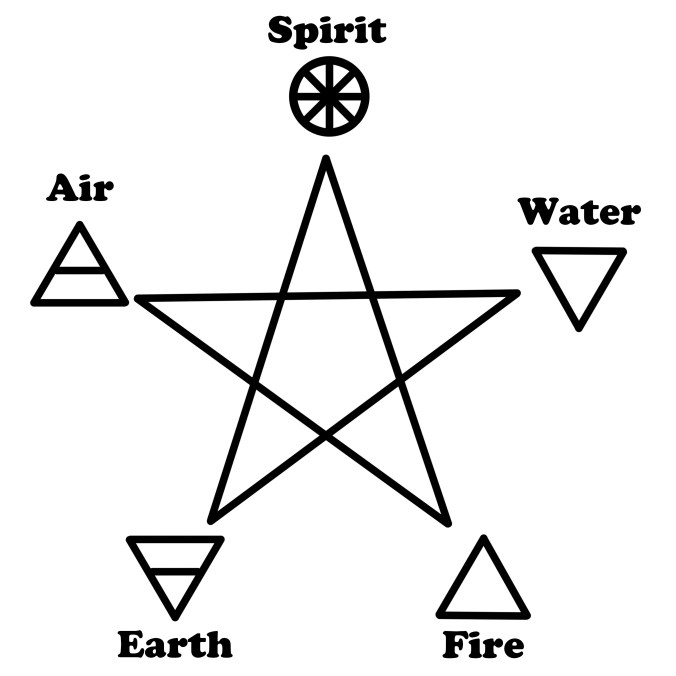
Wiccans observe that water is the element related to the West. West and water represent our emotions including love, lust, happiness and more. Some things that represent water are fish, seaweed, and a bowl of water. Use one of these items to stand for water in the west quarter of your cast circle.

Related to our 24 hour day, West lands at dusk. At this time, things wind down. For many, the workday is done and it’s time to rest up for tomorrow. We go home to our families and review the day’s events. This is a time of reflection and relaxation.

West’s season is Fall, the time of the harvest. Soon we can relax and reflect on our blessings of the year.

Wiccans also look upon the West as the time of old age. We enjoy the time we have left. We reflect on our actions in the past. This is a time of introspection and turning inward. We now prepare to step over the threshold into the West, through the gates of death and into the Summerlands.


Blessed Be,

Moonwater SilverClaw

Imbolc

Sunrise

The Light Grows

Imbolc

 The Sabbat Imbolc is midway between the Winter Solstice and the Spring Equinox when the light is beginning to return to the world and it is celebrated on February 2nd. Wiccans associate the Imbolc Sabbat with fire as they do at the Yule Sabbat. Can you see a theme here? This is for a reason: Fire honors the god and gives him strength. And who doesn’t like a nice warm fire on a chilly night during the cold part of the year?

At Imbolc the goddess has finally recovered from the strains of giving birth to the god. She is now back and ready to start the growing season of the year. Now purified, the goddess becomes the young maiden once more. Because of this, the act purification is a large part of this Sabbat.

At Imbolc we honor the goddess Bridget, the goddess of fertility and birth. She is the Celtic goddess of fire and rules the art of forge craft or metalsmithing. Bridget provides  inspiration and represents domestic arts like healing and cooking. We often use fires in the home as a nice way to honor Bridget, the goddess of the Earth.

Wiccans memorialize Imbolc, the time of purification, with the tradition of lighting candles. Candles provide inspiration and symbolize the growing light and strength from the sun god. Candles help coax the light into the year to come and bring on the bounty of nature. Imbolc is translated as “in the belly.” This refers to the coming of new life to the land.

At this time of the year, the ewes give birth to their lambs. Since the ewes’ lactation period has peaked at Imbolc, Wiccans view milk as an appropriate drink for this Sabbat. They enjoy lamb’s meat cooked on a sacred fire, paying homage to the goddess.

As the time of beginnings (births and the starting of new life), Imbolc is a good time for initiations and rededications for us. With the waxing year our intentions grow along with the light. And so our dedications to the gods grow in strength at this time.

Blessed Be,

Moonwater SilverClaw

The Direction North

Compass North

Compass North

The Directions

The four directions each have their own equivalent in these categories: element, time of day, season, and time in life. When you cast your circle, you call out the directions. You move in a clockwise direction (or deocil, pronounced JE-shil). When you cast your circle you do not merely call out North (for example), you are calling upon all of the facets that North represents.   Let’s look at North:

North

North’s element is Earth. Wiccans associate Earth with stillness, strength, and stability. Earth forms the foundation of our lives both physically and metaphorically. We literally stand on it. Soil, rocks, and crystals represent Earth. You can place one or several items in your circle in the north quarter standing in for Earth. When we talk about the twenty-four hour day, North rests at midnight when everything is still. At this time most beings sleep tucked away in slumber for the night. We peacefully sleep, waiting for the next day’s beauty. In the cycle of the year, North’s stillness continues as Winter. Beneath blankets of snow, many creatures hibernate. The earth sleeps until next Spring. In the life cycle, North manifests as the time of death for us and animals. We spoke of Winter, and many animals die during the frost-bound months. This corresponds to the time the spirit is in the Summerlands, where the soul can rest until its rebirth into a new life.


Blessed Be,

Moonwater SilverClaw

Happy New Year

Happy New Year 2013

Happy New Year 2013

Happy New Year!

Thank you to all my readers. You made this a great year for me. With all the parties and rejoicing that goes on at this time, don’t forget to help others. And what better way to do that than in the name of the Gods and Goddesses.  (You can keep your intentions to yourself if you like.)

With that said, this is a great time to review your commitment and dedication to the Gods. Renewing your original dedication ritual is a great way to further bond with the God and Goddess.

This can be as simple or as complicated as you would like. You could even just sit with a glass of wine or juice, light a candle and talk to the Gods telling them how much you appreciate them and what you plan to do for them in the coming year.

This isn’t a new year’s resolution; it’s a bonding experience between you and the God and Goddess. You don’t promise to do something that’s beyond your capabilities like solving world hunger. Instead, you might volunteer at a homeless shelter, feeding and caring for those who can’t help themselves.

You could volunteer at a pagan festival. Give your time to the community.

Don’t forget the furry, scaly and feathered brethren; you can help a wildlife sanctuary.

You have many choices. Take one step at a time dedicating your actions to the Gods.

Now is the time when you can help others and align with Wicca. Remember helping others is serving the Gods.

Blessed be,

Moonwater SilverClaw

The Law Of Three

Pond

The Universal Pond

The Law Of Three

Let’s talk about the Law of Three, or the threefold law of return. Whatever energy you send out into the universe will get magnified three-fold and then returned to you. It is a simple principle. But when we observe this principle in action, it proves complex.

Imagine that we have a pond which we’ll call the “universe pond.” You have some stones in your pocket. The stones represent the actions you take in life and in turn, the energy you send out into the universe arising from those actions.

You drop a stone into the pond. Ripples move out from the stone’s entry point to the pond.

As energy created from your action, the ripples spread into the universe and grow in magnitude. Eventually they hit the edge of the pond and bounce back to you in their magnified form.

So the stone you dropped in the pond, (action you took in the universe, whether it was a positive action or a negative one,) comes back to you. Just like nature, the universe has a  self-regulating system, many people call this Karma.

So carefully choose your actions.

May the ripples return to you three-fold in positive energy.

Blessed be,

Moonwater SilverClaw

Yule and Blessing Baskets

Yule Tree

Yule Tree

Yule

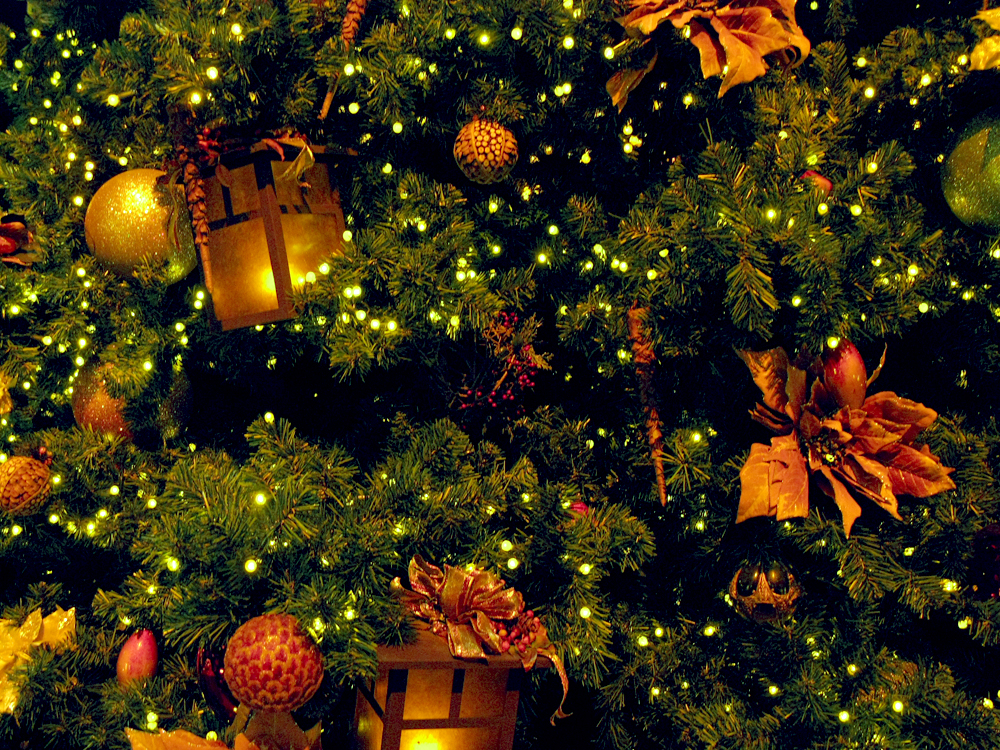
Yule is when the god is reborn from the virgin goddess. The goddess turns once more into her youthful form, as the young virgin mother. At Yule the goddess is the new mother and the god is her child.

Yule is also the Winter Solstice, the longest night of the year. In early human history, people feared that the sun would not reappear without help. With this belief began the custom of lighting candles and fires to lure back the sun. It was believed that this ritual would help the god to be reborn from the goddess, by helping the goddess to have an easy delivery.

Evergreen trees are associated with the Yule season. Our ancestors revered evergreens. Why? Evergreens were seen as proof of everlasting life. They saw that evergreen trees were the one source of life that continued to live and stay green throughout the year. Even in the deepest winter. They didn’t die with the rest of the plants during the cold months. They were special. Beginning with the Celtic Druids of central Europe during the Late Bronze Age, evergreens became sacred due to their representation of everlasting life.

The people of the day brought evergreens into their homes and decorated them with small gifts to the god and goddess. Candles were placed on the bows of the trees (I do not recommend this due to fire hazard). This is where Yule trees come from, and, incidentally, where the Christian’s get their Christmas tree. The Yule tree was so popular that the Church couldn’t stamp out the practice. The rest is history.

For Wiccans, Yule logs are another nice custom of at Yule. The pagans of northern Europe began the custom of cutting off a piece of a Yule tree (usually an oak tree) to save for a ritual the following year. For the ritual, people would gather on a hillside for a sacred bonfire and celebration. Afterward, they brought home a lit branch from the bonfire to light their fires at home, which had all been extinguished prior to the sacred gathering. They would then light their last years Yule log in their fireplace to bless their home. This tradition continues today.

At Yule celebrations, we gather with our loved ones to enjoy the merriment of the Sabbat with food and drink. We open gifts and sing songs about the god’s return.

(Note that those without fireplaces can drill holes into the top of a Yule log and burn candles. Commercially made Yule logs with candleholders are also available.)


What You Will Need

What You Will Need

Blessing Baskets

Blessing Baskets are a great tradition I’m starting up for this Yule. A Blessing Basket consists of a small basket that you hang on the Yule tree. Place the Blessing Basket somewhere special and prominent on the tree. What do you put inside the Blessings Basket? Small treats like candies and such, plus a small gift. Most important, include a piece of paper inscribed with a blessing of good fortune.

How to make a Blessing Basket

What you will need:

Basket

One small basket

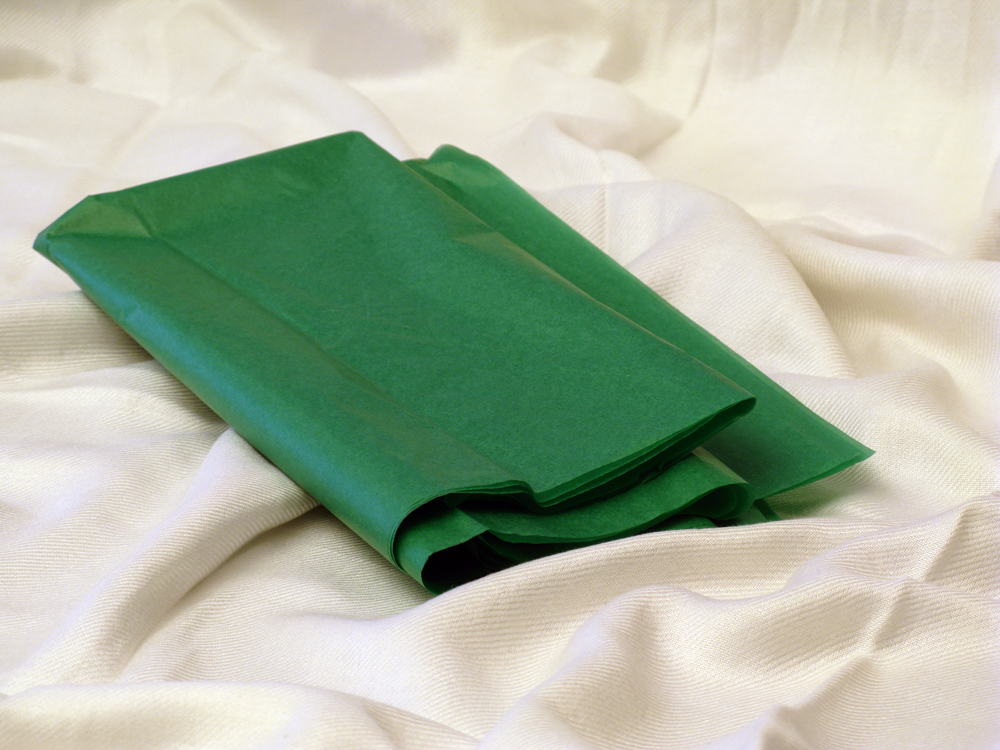
Tissue Paper

Tissue paper preferably in red and or green.

Red ribbon

Red ribbon

Candy and small gift.

Candy and small gift.

Slip of Paper

Slip of paper inscribed with a blessing of good fortune.

Putting it together:

1)      Take the basket and decorate it in whichever fashion you like, keeping the inside empty, here mine is already decorated.

Basket

One small basket

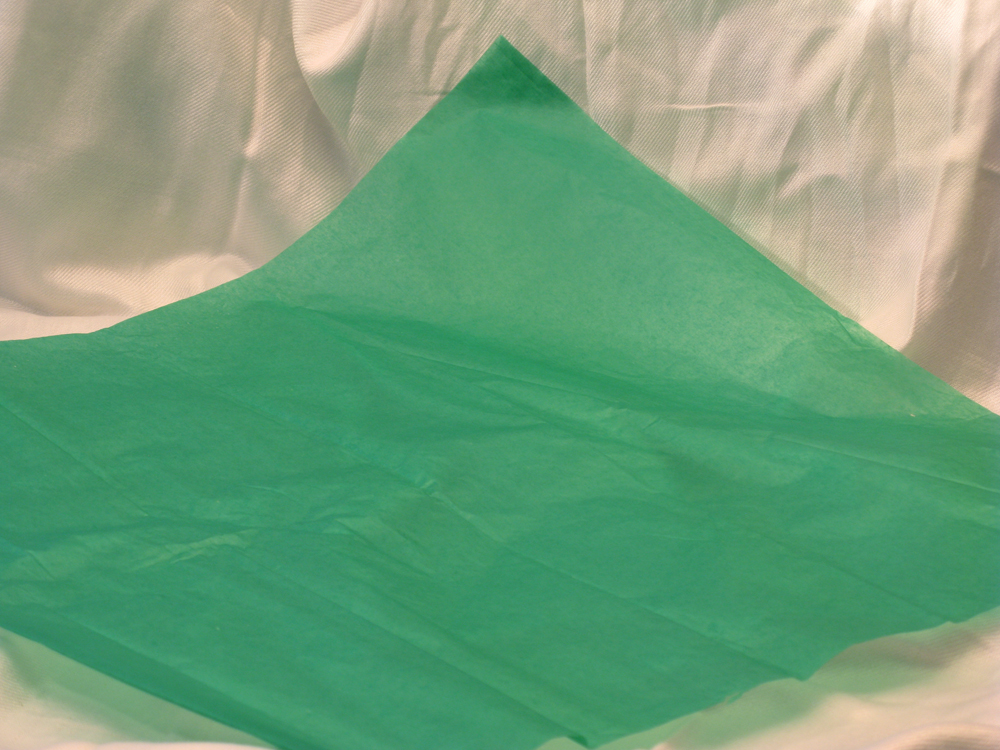
2)      Take the tissue paper and lay it flat on the table.

Tissue Paper Open On Table.

Tissue Paper Open On Table.

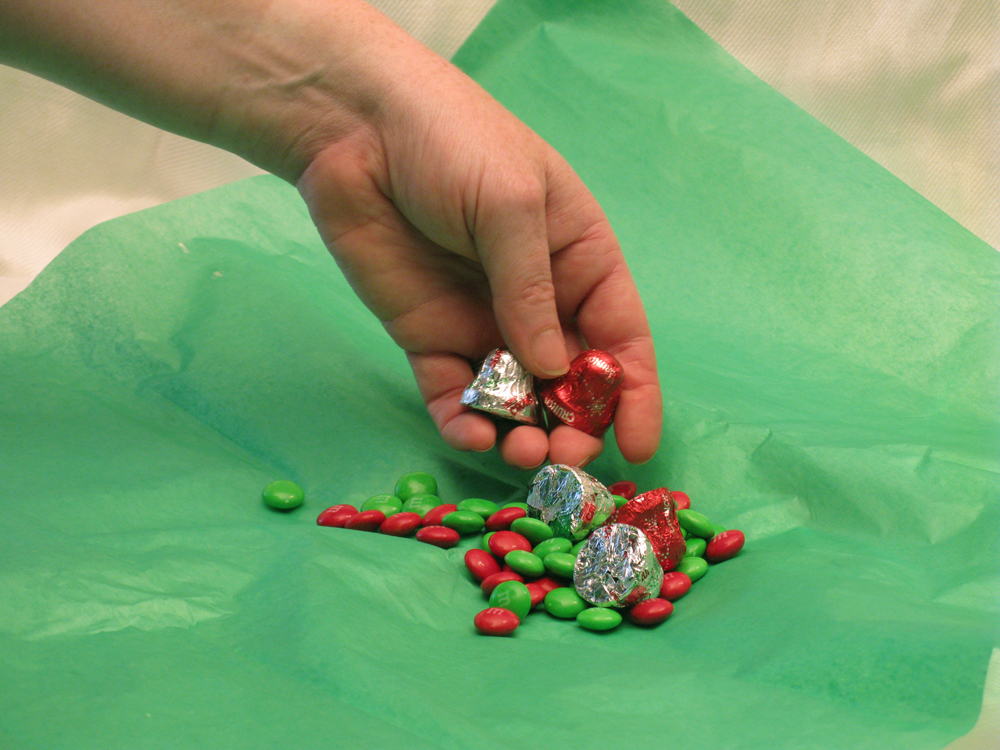
3)     Place candy and goodies on the tissue paper.

Scoop Candy

Scoop Candy

Place Candy on tissue.

Place Candy on tissue.

Place Candy on tissue.

Place Candy on tissue.

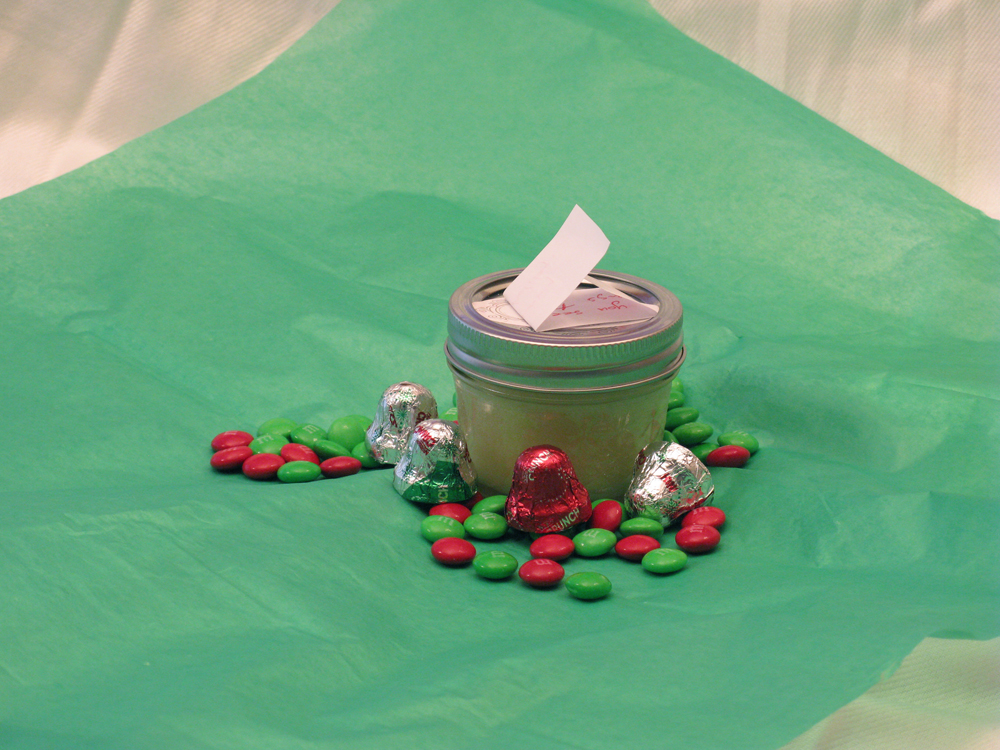
4)       Place the slip of paper inscribed with the fortune and a small gift in the middle of the tissue paper.

Place gift and paper now ready To wrap.

Place gift and paper now ready To wrap.

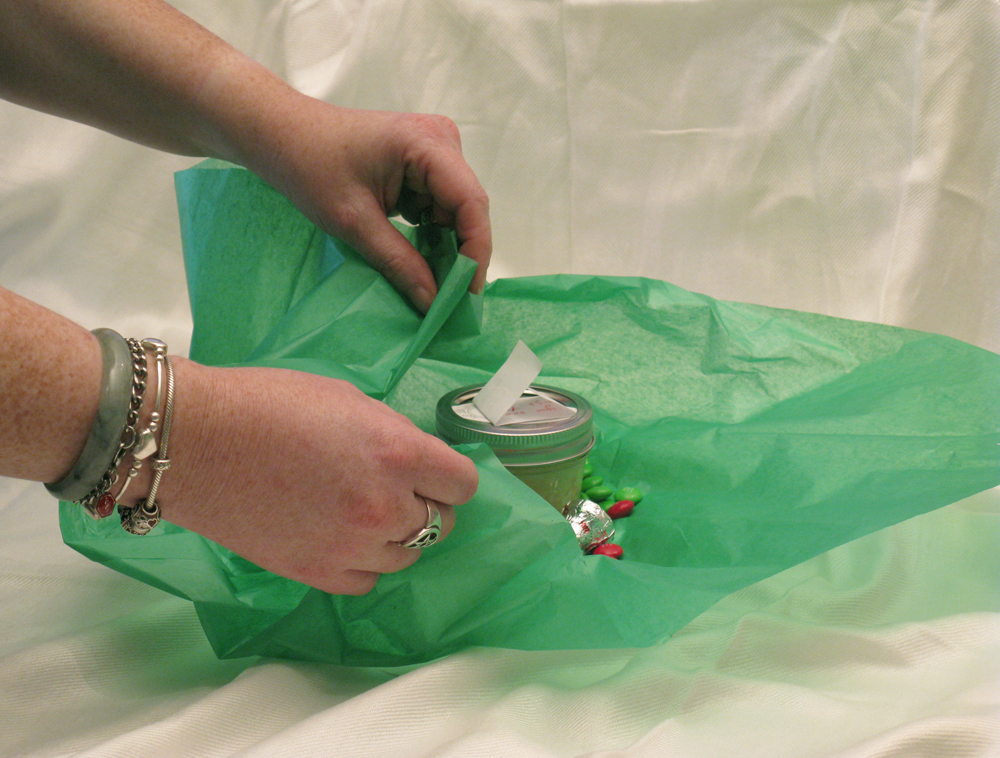
5)      Gather corners of the tissue paper and bunch the corners together.

Gather the edges.

Gather the edges.

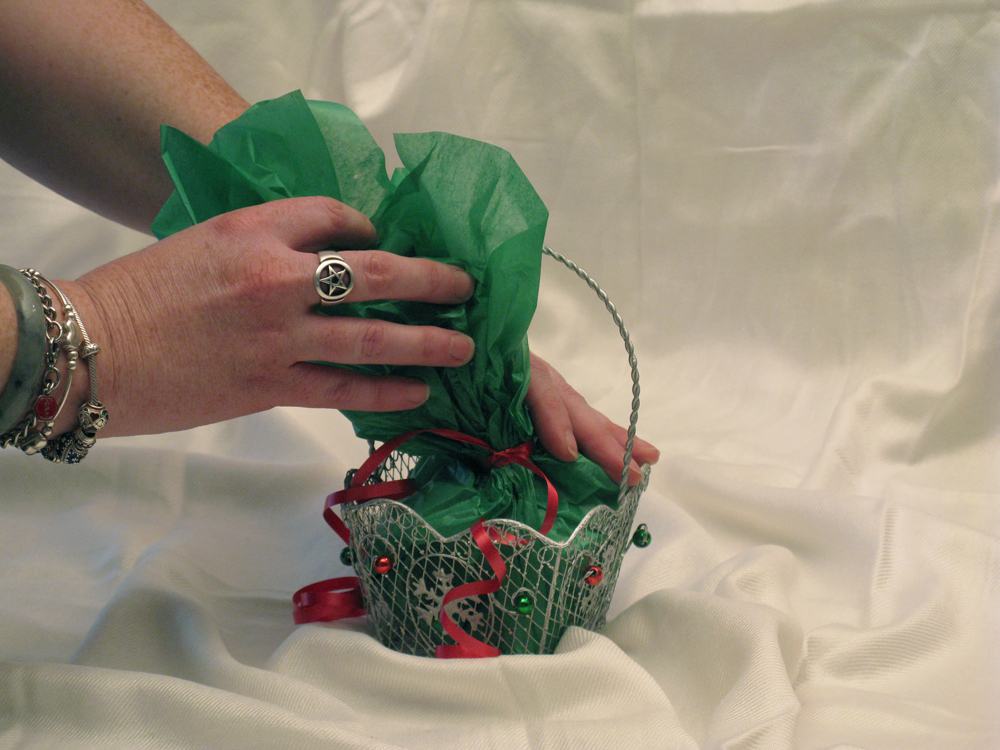
6)      Use ribbon to tie up the bundle.

Tie Ribbon

Tie Ribbon

7)      Place inside the basket.

Place In Basket

Place In Basket

8)      Make a loop to hang your Blessing Basket on your Yule tree.

Finished Blessing Basket

Finished Blessing Basket

On Yule each person picks a basket that they did not assemble. The person reads their blessing of good fortune which brightens their Yule season.

Blessed Be,

Moonwater SilverClaw

Jason Pitzl-Waters of The Wild Hunt

The Wild Hunt

The Wild Hunt

Recently I had the pleasure of talking with Jason Pitzl-Waters, founder of The Wild Hunt. He answered questions I had about his journey and his work. I truly feel Jason does a great service to our community and so I would like to introduce him to you.

Moonwater: How did you start on the path to Wicca?

Jason: I was first introduced to Wicca in high school when a friend loaned me a Raymond Buckland book (the big blue one). That moment was a completely life-altering moment. While I was dissatisfied with mainstream religion, and always interested in pre-Christian mythology, I had never thought that the worship of pre-Christian gods was something that people could do. From there I never looked back.

Moonwater: Who has influenced you the most on your journey with Wicca and why?

Jason: I would say my friends were my biggest influence on me, it was together that we fumbled through learning and experiencing Wiccan ritual. Later, I would meet formal covens, and a variety of experienced practitioners, but I think those early days shaped me in ways that persist to this day. Beyond that? I found the writings of Margot Adler and the Farrars pivotal in my early years.

Moonwater: What led you to blog for the community?

Jason: A dissatisfaction with the Pagan media led me to trying to do it for myself. This was the early days of the Internet, before social networking became dominant, and even before blogs were something pervasive. I remember wanting to know what was happening in our community, to know what our leaders, clergy, philosophers, were thinking about important issues. There were some useful sites, Witchvox, for example, but nothing that captured the sort of advocacy journalism I yearned for. So I became the change I wanted to see in my community, and here I am!

Moonwater: What book or books have influenced you in your practice of Wicca the most?

Jason: Drawing Down the Moon by Margot Adler, A Witches’ Bible Compleat by Janet and Stewart Farrar, The Spiral Dance by Starhawk, and later, The Triumph of The Moon by Ronald Hutton.

Moonwater: For someone who is just starting on their own path with Wicca, what would you tell them was the most important thing to know about it?

Jason: The interconnectedness and sacredness of nature, and by extension, the turning of the wheel of the year. Everything springs from there, our wisdom, our joy, our fertility, and our gods and goddesses.

I just want to say thank you to Jason for his time for this interview. Please visit The Wild Hunt to see what Jason has to say on the pagans days events.

Blessed Be,

Moonwater SilverClaw


Blogger Jason Pitzl-Waters

Jason Pitzl-Waters

Jason Pitzl-Walter’s Biography:

Since launching “The Wild Hunt” in 2004, Jason Pitzl-Waters has become one of the leading voices for analysis and insight into how modern Pagan faiths are represented within the mainstream media. In addition, “The Wild Hunt” has also conducted in-depth interviews with prominent figures within modern Paganism, academia, and religion journalism. Jason wants to raise the level of discourse and journalism on important issues within the modern Pagan and Heathen communities, while advocating a broader commitment to encouraging religious multiplicity and solidarity (where appropriate) with surviving indigenous and non-monotheistic faith groups.

In addition to his work with The Wild Hunt, Jason has also written for newWitch MagazinePanGaia MagazineThorn Magazine, and Llewellyn Worldwide. He also maintains a weekly podcast entitled“A Darker Shade of Pagan” that explores underground music from a Pagan perspective.

Jason is a former Board of Director member of Cherry Hill Seminary, and is coordinating The Pagan Newswire Collective, an open collective of Pagan journalists, newsmakers, media liaisons, and writers who are interested in sharing and promoting primary-source reporting from within our interconnected communities.

You can contact Jason at jpitzl at gmail dot com

What is a Magick Circle?

Stone Circle

Stone Circle

A witches’ magick circle is one we create out of energy. We set up this circle, or “cast a circle,” before any spell or ritual. By the way, we apply the label “a working” to any spell or ritual.

Here are reasons we use a magick circle:

  1. To hold all the energy that we create, we use a circle to contain all the energy we raise within it. Therefore, no energy dissipates before we can use it.
  1. As a sacred space, the circle functions as a temple to worship the gods in.
  1. The circle moves us between the mundane world and the realms of the gods, so that we may communicate with them easier.
  1. The most important thing that a circle does is function as a protection or barrier from unwanted entities that may want to “feed” off the energy we have raised.

When do we raise a circle? For rituals, meditation or handfasting ceremonies (Wiccan marriages). You always close your circle when you are done with it. If you leave it up the energy will eventually become unstable and will become dangerous.

A circle forms our sacred space for doing our workings. We can set up our circle as our temple wherever we find ourselves in the world.

Blessed Be,

Moonwater Silverclaw

The Element Water

The Element Water

The Element Water

Water

Water corresponds the direction West. Like Earth, water is a feminine element. The Earth’s oceans represent the womb of all life on the planet we call mother. Wiccans look upon sea water as a representative of the goddess’ womb.

A mother’s womb holds a sacred water that is saline similar to the salinity found in sea water. So Wiccans apply sea salt to water to create their holy water.

The Undine is the elemental of water. The Undine can manifest in many forms, from mermaids to sirens of the sea.

Wiccans use various things to represent water including sea shells, sea weed, water, sponges, and fish.

Blessed be,

Moonwater SilverClaw

The Element Fire

Element of Fire

Element of Fire (thanks to Arthur for the photograph)

Fire

Aligned with the direction South, Fire is associated with energy and heat. European originators of Wicca held the understanding that South and fire were related.  As the Europeans saw it, the farther south you go toward the equator the temperature heats up. So the South and fire were linked.

We also see Fire as a masculine element. Fire kindles our bright spirit into action. Fire drives us; it is the moving force for our will. Fire inspires. Simply, fire is energy! A transformer, Fire gives us the power to change our thoughts which change our actions and our lives! We jump in and tackle our problems.

The Fire’s elementals are Salamanders. Our ancestors saw the red coloring of salamanders’ bellies and associated them with fire. Seen as dragon like, the elemental Salamanders are shape-shifters like the flames themselves. Sometimes, Salamanders can have wings and human faces like Sylphs.

Some things that represent fire for Wiccans include: embers, the sun, hot chili peppers, and a candle’s flame. You can use any of these items in the South quarter of your circle to represent Fire.

Blessed Be,

Moonwater SilverClaw