Tools of Wicca – Water

Merry Meet.

In the last post we looked at the cup and its use. Now we will look at water.

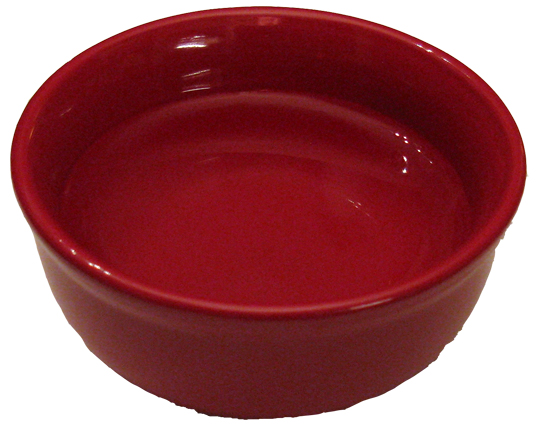
Bowl of Water

Bowl of Water

Water is one of the four elements on our altar. As a feminine element, water represents the embryonic fluid of birth. It represents not only birth but also death–in the cycle of life. Both Death and water are associated with the West, which in turn is associated with the Summerlands. People of many cultures think of the afterlife and the need to cross water in some fashion to go the other side.

We use the water in conjunction with blessed salt to make our holy water. In turn, we use this holy water to cleanse objects and people. Holy water represents the salinity of the oceans and of the womb we all come from.

In the next post, I will discuss fire and its properties.

Blessed be,

Moonwater Silverclaw

The Tools of Wicca: The Cup or Chalice

Merry Meet and welcome. Last time we talked about the athame. Today we will talk about the chalice or cup.

The Cup

The Cup

The cup is an important tool, and it can be made of just about anything. Glass, metal, or even wood. Since plastic usually does not hold a magickal charge, we tend to avoid using that material. (I spell magick with a “k” at the end to distinguish it from stage magic which is just slight of hand.

Usually we pour wine into the cup, but, you can substitute juice if you do not drink alcohol. Some people are allergic to alcohol or simply choose not to drink it and that is fine.

After we’ve poured wine in the cup, we use a ceremony to bless it. After that, we pour a portion of wine into a small bowl as a libation to the Gods. We then exclaim, “To the Gods.” After that, we drink the wine from the cup.

If your ceremony includes more than one person, (if you’re not practicing as a solitary), the cup is passed from one person to another while saying: “May you never thirst.” The person, who receives the cup, replies, “Blessed be.”

In my next post, I will discus the water bowl. Hope you have a great day!

Blessed Be,

Moonwater Silverclaw

The Tools of Wicca: The Athame

Merry Meet. In my last post we discussed a little about what Wicca is. Now, lets discuss how it is practiced.

How do I practice Wicca?

We as Wiccans attune ourselves to the seasons and use the Sabbats as one of those tools to help us do so. I will be discussing the Sabbats later. I think you should know about the tools first, so let’s talk about the tools we use to help us practice the craft. We will start with the athame.

Tools

The Athame

The Athame

One of the most used tools in Wicca, the athame is a ritual dagger that we use to channel and direct energy. It is used to bless and consecrate other tools, such as the elements on our altar, which we will also discuss later.

The athame (as you can see above) usually has a black handle. It has a double edged blade. One of the most important things about the athame is that it is NOT used to cut physical objects. You never cut physical objects with it. That is what the boline is used for. We will discuss the boline later, too.

The athatme is used to channel the energy you raise to where you need it to go. This could be sending energy to bless something or in some cases even casting a circle. However some covens use the sword for that purpose. Yes, some Wiccans use a sword in their rites. The sword is just like a large athame.

The athame is generally held in your dominant hand, because, this is usually the hand most people use to “push” energy out of. So pushing the energy out and directing it with the athame is the natural next step. Each tool can either represent the masculine or the feminine. The athame is a masculine tool.

In the next post I will discuss the cup or chalice.

Blessed be

Moonwater Silverclaw
What is Wicca?

Merry Meet. As we talked about in the last post, this is a blog for the neophyte. So we will start at the beginning.

What is Wicca?

Wicca, also known as Witchcraft, has been practiced throughout history. Some practices of Wicca or Witchcraft have their roots as far back as the stone age. This is why it is also known as the Old Religion. It’s also known as “the Craft.”

Wiccans honor the cycles of the Earth and Sky. We honor the seasons and the cycles of life and death. We perform Sabbats to honor these cycles. The Sabbats express the life cycle in the seasons, and the turning of the year.

The term “turning of the year” comes from the way we look at a year. We see it as a cycle or a circle. Never beginning, never ending, it’s an ever-turning wheel. This is why we believe in reincarnation. It will be clearer when we look at the different Sabbats and the roles they play in the life cycle.

Wiccan Wheel of the Year

Wiccan Wheel of the Year

As I said before, the cycles of the year are marked by the Sabbats. We as Wiccans strive to attune ourselves to these cycles at the Sabbats:

  • Yule (Approximately Dec 22,  Winter Solstice)
  • Imbolc (Approximately Feb 1 or 2nd)
  • Ostara (Approximately March 22nd,  Spring Equinox)
  • Beltane (May 1st)
  • Litha (Approximately June 22nd Summer Solstice)
  • Lammas (August 1st)
  • Mabon (Approximately Sept. 22nd Fall Equinox)
  • Samain (Oct 31st)

Now knowing a little about what Wicca, we will discuss how to practice Wicca in my next post.

Blessed Be,

Moonwater Silverclaw

Merry Meet!

Merry meet and welcome to the Hidden Children of the Goddess blog. I am here to answer questions about Wicca that you may have and to inspire the practice of Wicca to all who are interested in the Craft. Therefore this blog is meant to educate and to inspire the student of Wicca.

I started on the path of Wicca in 1992. Slowly learning the Craft as a solitary Witch, I finally found a mentor in 2002. Now that I am a High Priestess I want to give support to those who are seeking information on Wicca.

So this blog is for the Hidden Children of the Goddess, for those who seek knowledge in the practice of honoring the gods and creating positive change in one’s life and in the world.

Blessed Be
Moonwater Silverclaw