“When you’re using Black Magick, you’re—” the comparative religion student said, as he stared at me.
“Hey, she hasn’t said anything about Black Magick,” the college class instructor clarified.
I added that Wicca is a positive spiritual path. I emphasized: “There is no White Magick or Black Magick.”
Further in the discussion, another student asked, “Black Magick is about doing something bad to someone else—right?”
Still, another student said, “But I thought White Magic is when you do something good for someone.”
Stop. First, this is a “dualism way of thinking.” This type of thinking dates back many centuries. For example, in Zoroastrianism, the One Deity was said to have two manifestations: good–Spenta Mainyu and bad–Angra Mainyu.
Some comparative religion scholars suggest that this good/bad idea continued through Judaism and Christianity.
This dualism idea is not the Wiccan approach. Modern Wicca traces back its insights to pre-Zoroastrianism times.
In Wicca, magick is energy and a resource. Similar to water, it is neither good nor bad.
Here are two examples about water:
Lost and staggering in the desert, you’re parched, dehydrated. And water saves your life.
OR
You’re taking a wonderful cruise, but a rogue wave knocks you from the deck. You tread water until . . . you can’t, and the sea takes another victim.
So is water good or evil? No. It just “is.”
Wiccans can use magick for good or bane (“a source of harm or ruin” – Merriam-Webster.com). The practitioner’s intention takes the resource that is magick and turns it to good or ill. Magick is simply the natural energies around us. I’ll say that Black Magick and White Magick are misnomers.
So does this mean that the practitioners can be either White Witches or Black Witches?
I suggest we drop these terms.
Still, we all have a light and a dark side.
My point is: Let’s drop these labels Black and White. Instead, remember the Wiccan Rede: These Eight words the Rede fulfill: “An Ye Harm None, Do What Ye Will.”
Yes, evil exists.
But if we stick to the Wiccan Rede, we can walk a positive and spiritual path.
Blessings,
Moonwater SilverClaw
For more of Moonwater SilverClaw, consider some of her books:
I placed the bowl of salt on the altar and then, gently, my mentor moved my hand to the left. Just then, I had the instinctive feeling that the bowl of salt was now in the right place.
I’ve found that having a mentor brings out an aspect of Wicca that one cannot find in a book.
Imagine trying to learn to swim without getting in the water.
Similarly, did you learn to ride a bicycle with no one next you? Learning to ride a bicycle is a good metaphor related to rising to higher levels of Wiccan practice.
You could read a book about a bicycle or watch other people riding bicycles, but that is not the same as having a mentor guide you.
When my dad taught me to ride a bicycle, he was there offering advice and helping me right the bicycle when I took a couple of spills.
Wicca is an experiential process. A mentor can guide you in a progression of experiences so that you learn at a good pace and have successful experiences along the way.
The idea of being a mentor means so much to me that I’m now completing a video in which I talk directly with the viewer and show the process of a number of meditations. I provide guided meditations—this is a prime example of when a mentor can provide an experience to help the viewer go deeper in his or her practice.
Consider ways to bring a mentor or mentors into your journey.
You’ll make progress faster and enjoy the journey more.
Blessings,
Moonwater SilverClaw
For more of Moonwater SilverClaw, consider some of her books:
Imagine you could enhance your magick working with a simple process. How? Your ritual bath. It’s important because it puts you into the right frame of mind before you perform ritual. Secondly, you physically clean your body of the dirt and grime of the day. Finally, ritual bathing cleanses you of the psychic garbage that clings to you.
You can choose any soap (a required part) that you prefer. Wiccans appreciate handmade soaps, especially if they already contain the herbs or essences one already uses in magick work.
How do I make my bathing a ritual bath (or shower)?
Bless and consecrate your soap and shampoo. Set these aside for use only during your ritual baths.
How to make a sachet with cleansing herbs for a bath:
Use a stocking or cotton cloth, and place inside selected cleansing herbs. The total amount of all herbs will be one tablespoon.
If you use a cotton cloth, gather the corners and tie them with a string. Make sure the sachet is closed and secure. This keeps the herbs from clogging your drain.
Place your sachet in the bath water then sprinkle in some sea salt and let steep for 5 or so minutes. Then enjoy.
Making a cleansing shower tincture:
If you will be showering, place your sachet in a large container of hot water to steep. Sprinkle sea salt and dissolve it into the mixture (the tincture). When the water cools to a comfortable temperature, then take into your shower and wash with soap, envisioning all the psychic garbage leaving you.
Then pour the contents of the tincture over your head and rub it in. In this way, the contents help you complete your cleansing. The residue flows away, down the drain.
Add a blessing
I also add a blessing at the end of my ritual bath. I’ve added some modifications to a popular blessing.
Wiccan Blessing
Starting at your forehead say as you touch you third eye say:
I bless myself by the Goddess,
(Touch your right breast)
By the air that is her sweet breath,
(Touch your left shoulder . . . [you are actually forming a pentagram with these movements].)
By the earth, that is her fertile body,
(Touch your right shoulder.)
By the waters that is her life giving womb,
(Touch your left breast.)
By the fire that is her bright spirit,
(Touch your third eye.)
May I be blessed, so mote it be.
Upon completing your ritual bathing, you’re now ready to enter circle to honor the Gods respectfully. Not only will the Gods be happy but your fellow practitioners will be grateful, too. (Trust me.)
Are there particular rituals you like to do prior to entering circle? Let me know in the comments section below.
Would you benefit from studying with an online Wicca or Pagan school? To explore this topic, I interviewed Heather Greene, Luna Marr, and Aline O’Brien.
(Some responses may have been edited for length.)
Let’s start.
* When should someone consider going to an online school?
Luna: When it’s necessary. Some students work out very well with books and doing their own research, but there are others . . . who feel they need to hide their beliefs and study in secret, or just live in areas where a one-on-one pagan education isn’t available. Not all online educations are equal. . . . Some online schools just charge you money, hand you a bunch of information with little to no guidance. And others give you a mentor experience [in] your own home via the Internet.
Aline O’Brien: In the case of Cherry Hill Seminary (CHS), because there is no other school offering full training parallel with what is taught at mainstream seminaries. I strongly feel that Pagans should collaborate on the creation of our own culture. That means not attending liberal Protestant seminaries because you think they’re the only game in town when it comes to seminary-type training (chaplaincy, pastoral counseling, interfaith, history, etc.)
Heather: Online schools can help people who, for one reason or another, don’t have the ability to physically attend classes. In addition schools like Cherry Hill Seminary offer access to subjects and teachers that might not be available locally.
Moonwater: I agree. Online education may be necessary for someone who does not have a local pagan community for support.
* Would you use an online choice for your primary way of learning Wicca verses face-to-face learning?
Aline: Not necessarily. It really depends a lot on what’s available in a particular individual’s area.
Heather: I would not choose distance learning as my primary way of learning any subject unless no other option was available. And there are situations where that is the case. I do prefer the immediacy of presence and the concentrated, shared energy of the “classroom” experience. This cannot be replicated online. However I also believe that there are educational opportunities in all forms of learning processes. Distance learning gives us access to teachers and professional who might otherwise not be available to us at any point in our lives. I see that alone as an invaluable resource.
Luna: I wouldn’t say that I would choose it over face-to-face learning, simply that it’s an alternative and another valuable option. . . . In my school Pagans Learning Online we believe that an online education should mimic the face-to-face experience as closely as possible, through technology such as Skype, Google, and the ability to upload voice, video, and written materials. We are able to replicate the face-to-face experience fairly well. Is it the same as having that mentor there who can give you a hug when you’re down? Absolutely not. However, an online education can still offer the same benefits.
Moonwater: I prefer the face-to-face approach when possible. This way you can experience how your student moves and uses energy. However, it’s important to me that students have access to information. That’s the reason that I write this blog (with the help of my editors) and I wrote my book The Hidden Children of the Goddess.
* Are online schools helpful or harmful to our community?
Luna: This question is like a double edged sword. I want to say that online schools can be incredibly helpful to the Pagan and Wiccan community . . . . [But] some schools offer a lot of false certifications and dangerous ideas that if a person was so willing they could take advantage of. I even heard of one online school that tells you that you’re not allowed to worship the Gods and Goddesses unless you are a Level 1 priestess and [have] passed their tests. A student looking into an online school needs to know when something just doesn’t sound right or seem right. They need to do their research. . . . Healing of the aura and the chakras is something that should be left up to trained professionals. . . . For people who are forced to practice in the shadows, having the opportunity to practice online is something that [can] change who they are in a positive way. Online schools have the ability to help guide and grow future leaders of the Pagan and Wiccan community so that the next batch of people who look for a place to learn may not have the same struggles.
Aline: Some are helpful, others not so much; depends upon the school. I can say, however, that Pagans attend CHS for two primary reasons: one is for personal enrichment and the other to better serve their own communities. They don’t come so they can get a degree and get a job by being hired by some Pagan ‘church.’ They don’t come so they can get a raise at their current job. In the bigger picture, some seek chaplaincy degrees because in the mainstream world having one is required in order for one to do that work (the military being the most stringent in terms of chaplaincy requirements).
Heather: Just like anything, distance learning can be both helpful and harmful. It is helpful for the reasons specified above. Distance learning can offer people an opportunity to attend classes that they might not be able to otherwise. At the same time, distance learning is not yet accredited in the same way as conventional institutions. Assessing a school’s credibility and legitimacy is left to student and [it’s] often very difficult. The digital world has created a universe in which legitimacy is easier to falsify. Students must be very cautious.
* Online schools are on the rise, so how can you tell if one is right for your student?
Luna: It’s about doing the research, knowing yourself and your own personal learning style, and using your common sense. . . . Paganism and Wicca are terms for thousands of proud and dedicated religious pathways and traditions, rooted 60,000 years in the past. That isn’t easy stuff to learn over night. I think that as a society we get far too wrapped up in the “I want it now” of things and we overlook the hard work and dedication it takes to do something right. So before you jump into the first online school of Paganism that you see, do some research and ask some questions and remember that if it doesn’t look right or sound right then keep looking.
Heather: It is important to research the institution, teachers and the administrative staff; to examine the promises made and the cost; to talk to former students and to ask as many questions as possible.
Aline: I would say in the same way one would explore schools for any other kind of learning–read everything possible, ask others who attended that school, etc. I’m not sure I quite ‘get’ telling what’s right for one’s student. To me, the student her/himself would be the person making such decisions. S/he could seek advice and recommendations from a teacher. Alternatively, a particular teacher may wish to direct a particular student to a specific online educational resource/school for, say, a course on ministering to the dying.
* When should you not consider a school as a supplement for your student?
Heather: If local resources and lifestyle permit, it is good to consider the local options first. I would also steer a student away from a school that does not “check out” as legitimate.
Aline: Again, I can’t really speak knowledgeably to this because my experience is with a graduate school. It’s not about learning Wicca per se.
Luna: The only answer I would have for this is when the reason for seeking out the education isn’t pure of intent. . . . However if what you’re looking for is a chance to grow both as a person and in your magical abilities and you embrace the dedication it takes, then online schools are a great choice. I have seen many students whose self-esteem has bloomed. [And, one’s] inner light and love of yourself and those around you [become] powerful tools to change the world.
Since, Luna and Aline are active with online schools, I asked this question:
What can web schools like yours offer students with mentors?
Luna: I suggest a student stay with their mentor . . . unless they aren’t getting a full education from their mentor. I have had very good mentors. My first mentor was a Wiccan High Priestess. I myself have chosen the path of druidry, but it was very nice and refreshing to be able to learn so much about the Wiccan beliefs and practices. [I enjoyed] spending time with someone who knew what I was going through at a young age and was able to help guide me. It was a valuable experience. However, she was only able to offer me part of the picture that I was looking for. She could only teach me about Wicca. Because of this, I found myself studying books for years, doing research and seeking out others who had other beliefs.
Aline: The online school with which I’m affiliated, Cherry Hill Seminary (www.cherryhillseminary.org), provides primarily graduate-level education. We offer two masters’ degrees–M.A. in Pagan Studies and M.Div. So CHS is different from other online Pagan schools in that our students are already whatever kind of educated Pagan they are. In other words, mentors aren’t in the picture. Those who are seeking degrees, which is not all of our students, must attend two live, in-person multi-day retreats during the course of their studies. (http://www.cherryhillseminary.org/) CHS has a Dean of Students, who is not exactly a mentor but does help students determine their personal course of study. I think (not entirely sure) students have faculty advisors when they choose a degree path. (There’s tons of detailed info on this topic in CHS’ Catalogue.)
Some Pagans view Online Wiccan education as a controversial topic. The views expressed above belong to those who expressed them.
I, Moonwater, prefer the one-to-one mentor/student process (and that is my training). However, it strikes me that it is helpful to carefully study material if a local Pagan community is not available.
As with other important decisions, devote great care to your educational path.
Biographies of Our Interviewees
Luna Marr, has been studying paganism both independently and with various mentors for the last 21 years. She is very proactive in her local pagan community, serving as both clergy and secretary in her local pagan church. She says, “I have always believed that paganism deserves the same respect as other religions, but with that respect comes responsibilities to be knowledgeable in your beliefs and in the history of your beliefs. I feel that with the growing interest in paganism there need to be more hands-on ways for people to learn and grow without the pressure of being forced down one pathway or another.” Email: Luna@paganslearningonline.org Her online school is Pagans Learning On Line.
Do you travel a lot? Have you missed viewing your Gods from your home altar? Make a Portable Shrine. It’s fun.
The Mobile Shrine Closed
What you will need:
One wooden hinged box
Different colored tissue paper (I used some paper with a flower-pattern for one of my boxes.)
Image of the God
Image of the Goddess
Glue gun and glue
Tulip® Dimensional Fabric Paint–Glitter
Mini flowers and/or other decorations for the Gods
(For example, I included flowers for the Goddess. You can use beads,
paint, coins or other decorations that have meaning for you and your
Gods.)
Electric tea lights. Hotels do not let you use lit candles.
Mod Podge glue
Sponge applicator (for the glue)
Other decorations like stickers and such as desired
To start, I applied Mod Podge glue to the exterior surface of my wooden box. Then I affixed the flower-patterned tissue paper to the surface with the glue. Note in the photo how the patterned tissue paper provides an interesting texture. (Be careful and use glue on only one side at a time. Let the glue fully dry.)
Then I applied another coat of glue over the tissue paper to seal it.
As another option, you can paint your box any color that seems appropriate, perhaps, your favorite color.
Although you could add decorations to the outside of the box, I suggest leaving it plain. Why? You do not want a hotel maid or other stranger to be drawn to the box out of curiosity.
Inside the box, I used red tissue paper. Pick the color you prefer. Whether you glued paper or painted the inside, wait for it to dry. Then use glue to apply the images of your chosen God and Goddess.
Note in the photo that I used Tulip® Dimensional Fabric Paint–Glitter to cover the edges of the Deities’ pictures—gold glitter for the God and silver for the Goddess.
I added pearl 3D-stick-ons and other jeweled stick-on pieces to accent my images. I also added glittery stickers on the sides to personalize the interior of my box.
I strung beads in strands—two for the God and one long strand for the Goddess. I used fishing line for that. I draped the beads and used the glue gun to affix the ends in place.
As a finishing touch, I employed the glue gun as I added mini-flowers to the Goddess’ side.
Once your Portable Shrine is fully dried, you close it up. From the outside, no one will know what it is.
Take your Portable Shrine anywhere, open it up and place the electric candle in front to honor the God and Goddess.
My Portable Shrine is small and compact enough to fit into a backpack that I bring on a plane. I even took it on a cruise. It’s nice to have the familiar company of my shrine when I am away from home.
At home, I place my Portable Shrine in a prominent location and enjoy it.
Since, when closed, your Portable Shrine is nondescript, it can be placed on a book shelf or the corner of a desk. Some people consider using a Portable Shrine in a dorm room because the Portable Shrine can be closed quickly.
Making a Portable Shrine can be a fun family project. You could have each family member contribute to one Family Portable Shrine or each person could create his or her own. Perhaps, you might want to do both. They are fun and relatively easy to make.
So keep the craft in witchcraft and have some fun while honoring the Gods.
Are you less than jolly this time of year? Tired of hearing how happy you’re supposed to be during the holidays? Do you just want more peace during this stressful time?
Some of us find it a hardship to see relatives who don’t share our spiritual beliefs.
Many Wiccans and Pagans stay in the broom closet (in hiding) from family and friends. Why? Rejection. Some families even banish pagan relatives. This banishment would result if they discovered our hearts and minds are with the Gods. It’s just too much of a risk of loss for many to bear. In some communities, one may even fear retaliation by one’s own family.
I know some pagans who don’t face such consequences and who practice freely. These fortunate pagans told me that the others are “cowards” for hiding. It bothers me to witness such lack of compassion for others’ pain and problems.
How do we cope with such adversity?
Being in the broom closet is not a bad thing. For some, it is a necessity for keeping their job and family.
So how do we keep the peace in our own hearts this holiday season while in the closet? How do we still honor the Gods during the holidays with family? Here are a few suggestions:
Wear a pagan pendent under your shirt. (Just make sure that it can’t fall out and be seen by unfriendly eyes.)
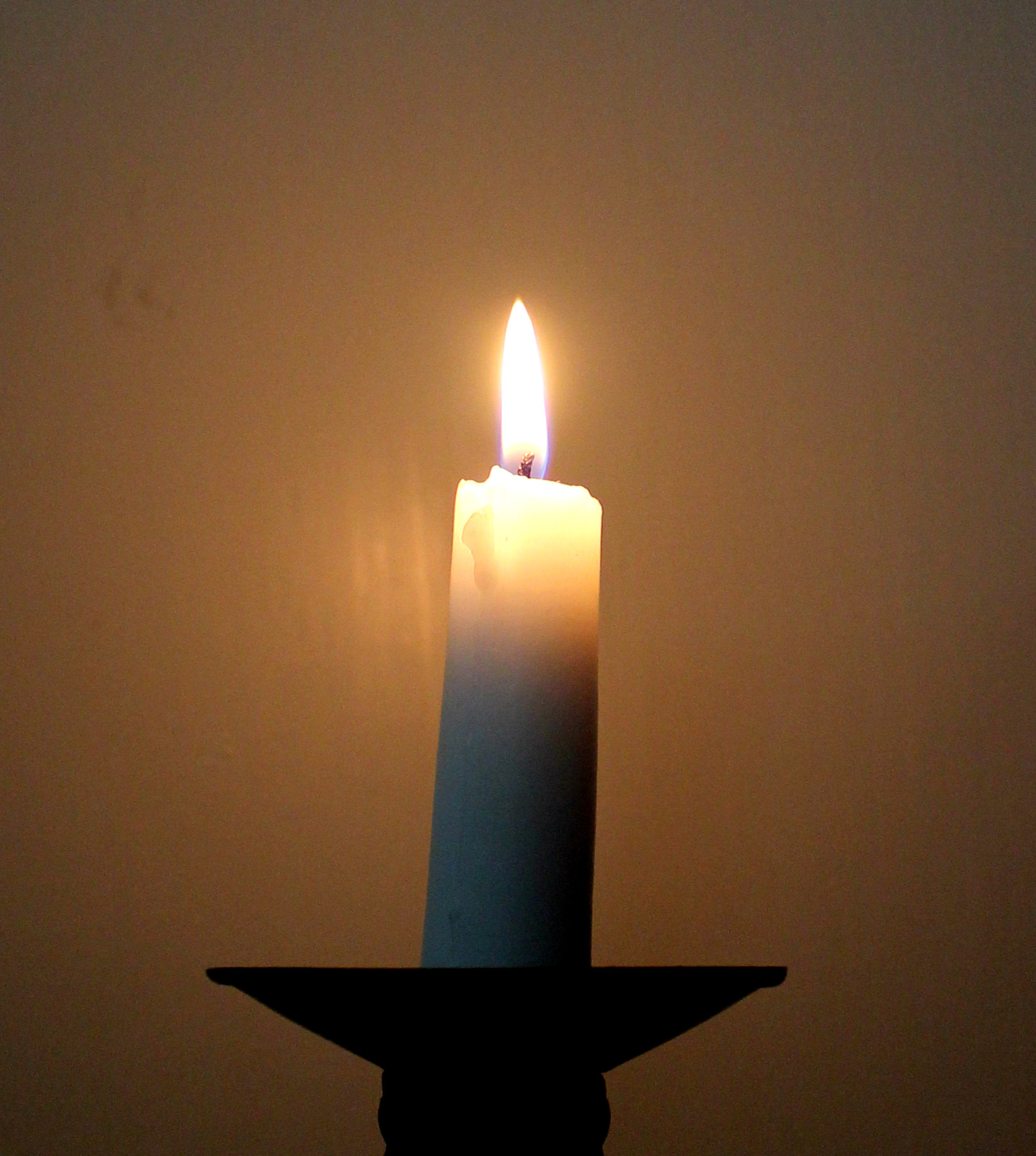
Light a candle (while saying a silent prayer) and place it on the mantel or other place of prominence in your own home.
Take a ritual bath before a gathering and honor the Gods. You’ll feel better.
Bring a bottle of your favorite drink (mead is mine) to a gathering.
Anoint yourself with sacred oil and keep your intentions of love and peace for the Yule holiday close to you.
These actions can be done in the broom closet and need not require permission from any unsympathetic family members.
And for that extra touch of magick here is a simple blessing you can say for yourself for holiday gatherings.
By the Gods and the four quarters might,
May this blessing be just right.
May the Gods love be in my heart,
May my heart be the center for my kindness,
May my kindness be a guide for my compassion,
May my compassion be an action of love in this world,
And may my action of love in this world bring peace to all at this time.
So mote it be.
How do you plan to celebrate this Yule Sabbat? Are there any ideas you would like to share? Let me know by using the comments box.
Blessings,
Moonwater
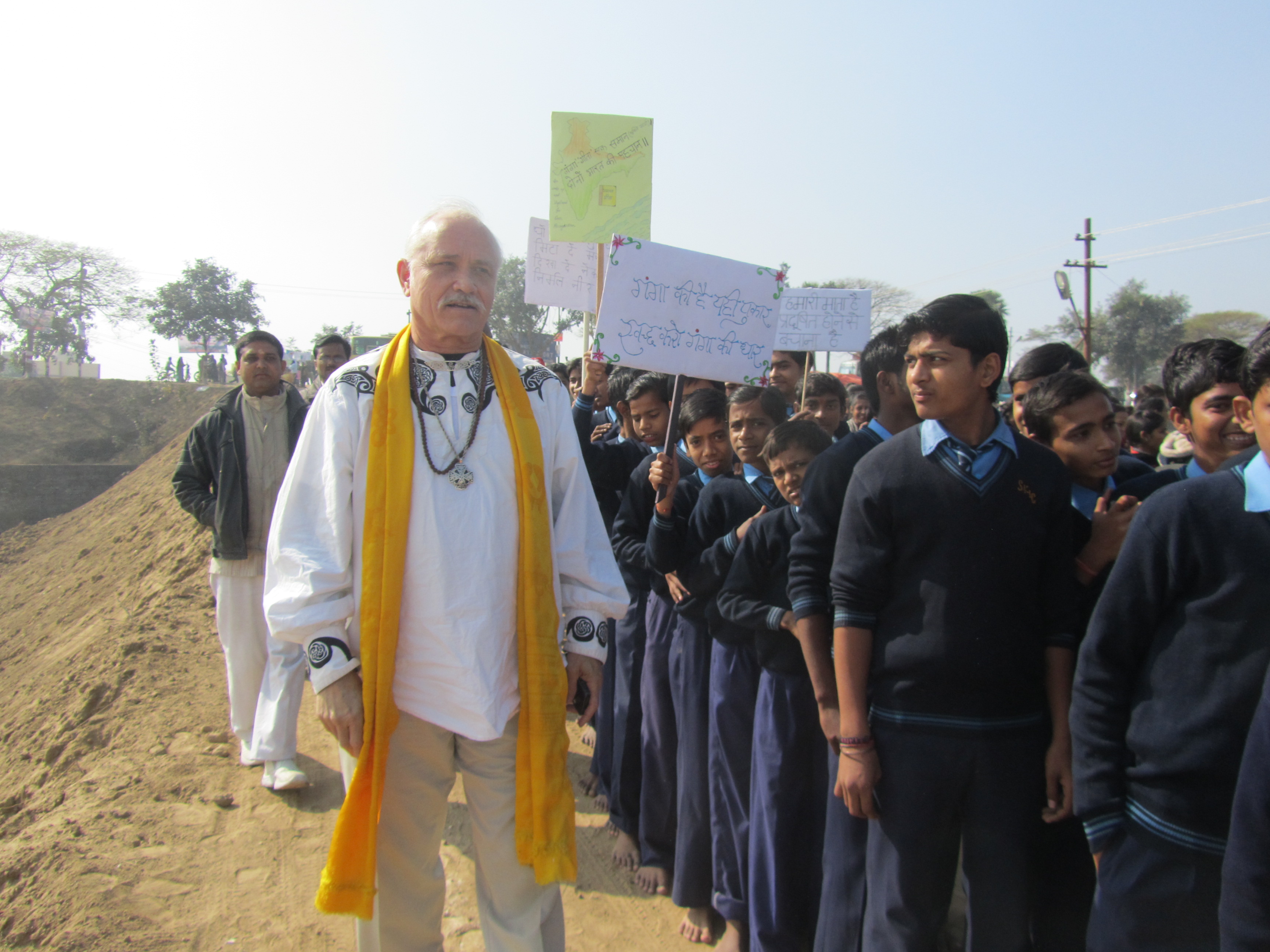
I wanted to take a moment and pass this vital message on to you from one of my mentors, Patrick McCollum. What the Patrick McCollum Foundation does is truly important to our community and around the world. If you think you can help, please contact Nell Rose.
Patrick leads march for preserving the Ganges and the Planet. 5000 children participated
“Patrick is quickly becoming one of the foremost voices in our world on the topics of creating world peace and sustaining all people. His message inspires audiences to recognize our inherent interconnection through a common narrative, which gives us greater access to envisioning and creating a common goal: a world that works for everyone. Patrick talked about some of the incredible things that have happened to him over the last 3 and a half years and I wanted to take a moment to review these once again:
Buddhist spiritual leaders in Thailand have named Patrick the “World Inner Peace Ambassador”.
He was an honored guest speaker at the World Culture Forum in Kazakhstan 2010 where he spoke on the importance of our harmonious connection with Nature and with each other.
He has been initiated as a Saint in India and given the name ‘Babaji’, meaning ‘Revered Father’
He has also been honored as the ‘King of Peace’ by renowned Tibetan Buddhist Rinpoche’s in our world, among receiving other titles of similar caliber.
In 2011 he was honored with receiving the Mahatma Gandhi Award for Religious Pluralism.
Last January, Patrick was invited to lead the opening prayer at the Maha Kumba Mela in India, a spiritual gathering that attracted over 100 million people.
In February, Patrick will be giving a blessing and be a part of the Maha Yaga in India.
In March he will be doing a workshop in Maui with Ram Dass.
Patrick’s teachings have helped many seekers make sense of the world and deepen their connection to Mother Earth and the Universe with an open heart in the wholeness of Love and Reality.
We are currently in an active fund raising program to help further Patrick’s work. We are attempting to raise $100,000.00 to create a digital media library to preserve the teachings of Patrick, and other like-minded spiritual teachers, update our web site, and help cover the cost of travel to the many events Patrick will attending and spreading his massage in creating peace bridges between countries and people, to help him to continue inspiring youth, to support women’s rights, religious equality and to continue to archive his spiritual practices and teachings, and for general overhead to help support and build a stronger Foundation.
We are also currently running an indiegogo campaign for Patrick for his upcoming Maha Yaga trip. If you could please send this to any list or social networking sites that you may be a part of to get the message out.
If you can contribute financially in some way that would be wonderful. Please contact me so I might provide further details on our Fundraising Goals and how you can help.”
How did you find the Wiccan faith? Was it through a personal connection or was it through a book or website?
Wiccans until recently were hard to find. Many followers of the path work in secret, in the shadows. Why have all the secrecy?
This secrecy was vital because throughout history and even to this present day Wiccans (and other pagans) have been and continue to be discriminated against.
Face it, we are still a minority faith in this world. Most practitioners prefer to stay in the shadows because of the possibility of retaliation and prejudice found in family, school, work, and the general public. We know too well that there are general misconceptions and fear about the Craft. So many Wiccans practice in the shadow. (After all, I call my blog and my book The Hidden Children of the Goddess.)
So how is one to find a reliable teacher while so many teachers practice in the shadows?
You need some initial education. Books can be a great way to start. Read a bunch of books and you will start to see a pattern. Your intuition will alert you to who really knows valuable material and who may be offering faulty information.
Here is a good reading list to start your path. Those of you who have been on the path for a time may want to revisit some of these books. It’s important to have a good foundation in the Craft before moving on to the more advanced practices.
Ferrar, Janet and Stewart. Eight Sabbats for Witches, Revised Edition. Phoenix Publishing, WA, 1988.
Ferrar, Janet and Stewart. The Witches’ God: Lord of the Dance. Phoenix Publishing, WA, 1989.
Ferrar, Janet and Stewart. The Witches’ Goddess: The Feminine Principle of Divinity. Phoenix Publishing, WA, 1987.
Ferrar, Stewart. What Witches Do. Robert Hale, 2010.
Fitch, Ed. A Grimoire of Shadows: Witchcraft, Paganism & Magick. Llewellyn Publications, 1996.
Frazer, James George. The Golden Bough: A Study in Magic and Religion, A New Abridgement from the 2nd and 3rd Editions. OxfordUniversityPress, USA, 2009.
Gardner, Gerald. High Magic’s Aid. Aurinia Books, 2010.
Gardner, Gerald. The Meaning of Witchcraft. Red Wheel/Weiser, 2004.
Gardner, Gerald. Witchcraft Today. Citadel, 2004.
Giles, Cynthia. The Tarot: History, Mystery, and Lore. Touchstone, 1994.
Graves, Robert. The White Goddess: A Historical Grammar of Poetic Myth, Amended and Enlarged Edition. Farrar, Straus and Giroux, 1966.
Leland, Charles G. Aradia or The Gospel Of The Witches. Kessinger Publishing LLC, 2010.
Lipp, Deborah. The Way of Four: Create Elemental Balance in Your Life. Llewellyn Publications, 2004.
Marcoux, Tom. Darkest Secrets of Spiritual Seduction Masters: How to Protect Yourself, Boost Your Psychological Immune System and Strengthen Your Spirit. Tom Marcoux Media, LLC, 2011.
McCoy, Edain. Sabbats: A Witch’s Approach to Living the Old Ways. Llewellyn Publications, 2001.
Murray, Margaret Alice. The God of the Witches. NuVision Publications, 2009.
Neal, Carl. The Magick Toolbox: The Ultimate Compendium for Choosing and Using Ritual Implements and Magickal Tools. Samuel Weiser, 2004.
Russell, Jeffrey B. and Alexander, Brooks. A History of Witchcraft: Sorcerers, Heretics & Pagans, 2nd Edition. Thames & Hudson, 2007.
Starhawk. The Spiral Dance: A Rebirth of the Ancient Religion of the Goddess: 20th Anniversary Edition. HarperOne, 1999.
Sylvan, Dianne. The Circle Within: Creating a Wiccan Spiritual Tradition. Llewellyn Publications, 2003.
Tognetti, Arlene. The Complete Idiot’s Guide to Tarot, 2nd Edition. ALPHA, 2003.
Tognetti, Arlene and Flynn, Carolyn. The Complete Idiot’s Guide to Tarot Spreads Illustrated. ALPHA, 2006.
Valiente, Doreen. An ABC of Witchcraft Past and Present. Phoenix Publishing, WA, 1988.
Valiente, Doreen. Natural Magic. Robert Hale, 1999.
Valiente, Doreen. Witchcraft for Tomorrow. Robert Hale, 1993.
Wood, Robin. Robin Wood Tarot: The Book. Robin Wood Enterprises, 1998.
Wood, Robin. When, Why … If. Robin Wood Enterprises, 1997.
Once you have read a number of books, you will have a basic familiarity with the Craft. Next, find a mentor in the particular Tradition (type) of Wicca you want to study.
The Witches’ Voice (witchvox.com) is a great place to read more articles and to network for new connections. You can find people who have taken the giant step (and risks) to be known in the community.
Observe carefully. Use your basic familiarity with the Craft and your intuition to find someone who you feel is a good match for your next steps in learning.
Each Tradition does the Craft a little differently. It’s not that one particular Tradition’s ritual is “wrong” compared to another Tradition. There are many ways of doing the same thing correctly.
How did you come to know the Craft? Let me know in the comments section. Thank you.
What is a “Tradition” in Wicca? It’s commonly called a “Trad,” and it’s a system of rituals and beliefs that a particular group follows. One Trad is Dianic which is known for its worship of a single Goddess and having a focus on feminism.
Another Trad is Gardnerian Wicca. Gardner stated that the New Forest Coven initiated him into their group in 1939. Many consider Gardnerian Wicca to be the earliest Wiccan Trad–from which many other Trads sprouted.
Trads come in many forms. Just like Christianity has many forms, the Trads in Wicca form different groups with different ways of doing things.
I find that the essence of a Trad is that it gets a person closer to Deity.
Unfortunately, much Wiccan knowledge has been fragmented sometimes due to people splitting off before they learned more and deeper knowledge.
At this point, I invite us of the Wiccan spirituality to realize that we all hold pieces of the same picture. However, none of us can see this picture by ourselves because we only hold a few of the original pieces.
We need to all gather together to make a whole picture. Coming together, we will be better able to see our own “missing pieces” and collect these missing pieces of knowledge. Then we can restore our own pieces to the larger puzzle.
If we don’t do this, much of what was learned and known will be forgotten. This piecing back together of the puzzle is something we all need to do. If we don’t, we may lose something very dear.
So let’s keep our community strong! Let’s get to know each other and respect our differences because there’s something to learn from someone different.






 GoddessHasYourBack.com