Squat the Parking Goddess

Car in parting spot

Need To Find a Parking Spot?

All hale the Goddess Squat! Please tell me you know Squat. If you don’t know Squat, you should.

Squat is the Parking Goddess. She gives you parking spaces to park in. I love Squat. I always ask for her help when I can’t find a parking space. She is obviously is a modern goddess. When I ask Squat for a space, 90% of the time she finds me one.

How do you ask Squat for help? Recite this little chant:

Squat, Squat,

Find me a spot!

I have done this and I kid you not, I don’t even finish the chant and someone pulls out of a space right in front of me! I immediately say with gratitude: “Thank you, Squat!”

After the day is done, and Squat has given me parking space(s), I go home and light a candle for her to thank her for her help. So invite her to help you. Now you can’t say you don’t know Squat!

Blessed be,

Moonwater Silverclaw

Blossom as the Real You

Blossom as the Real You

Blossom into the New You

Starting Wicca is like cleaning a dirty car for the first time. Before I left for a trip I decided to get my car washed. Why? My car was “the dirt clog on wheels.”

Though it’s supposed to be white, my car remained a splotchy palomino gray, for most of its existence.

So at the car wash center, I lined my vehicle with the others and left the keys in the car for the attendant. I sat down in the waiting area and watched car after car coming out of the other end of the giant cleaning machine.

I was sitting there for a while. Vehicles emerged from the cleaning machine, one after another. Soon I’m thinking, “Where’s my car?!” I recognized the car that had been in line in front of my car. But then, it took me a moment to realize that the gleaming white car behind it was actually my car!

This, believe it or not, is like the beginning of your practice of Wicca. Throughout your life you collect “dirt.” This can be in the form of unhelpful thoughts from people who think they know what’s best for you. This degrading process can lead to bad self-esteem. You might even doubt your worthiness in the face of deity and others. “How can I be loved if I do “X?”

All this buildup up of  degrading thoughts is like the buildup of dirt on my car. Soon you cannot even recognize the goodness and value you began life with.

Here are some examples of degrading thoughts:

“God won’t love me if I don’t pray three times a day”

or

“God will punish me because I’m gay.”

and

“I wont go to the promised land if I don’t go to [church, temple, the Mosque and so forth].”

All of these thoughts and other people’s “shoulds” are crap–like the bird crap on my car.

The world places unrealistic demands on us. “Nice girls don’t make trouble.” and “Men don’t cry.” This is simply “Crap!”

How does Wicca fit in? Well, all that crap you are carrying can be cleaned out and washed off. Just like my car.

Coming into Wicca, you carry the world’s crap upon you. The practice of Wicca with its car wash of meditation and self discovery will help you rid yourself of the unwanted grunge the world places on you.

When we practice our meditation techniques we get rid of the world’s “cling-ons.” And when that happens a whole new world opens up to you. Just like I didn’t recognize my car at first, your family and friends may not recognize the new you either.

Be aware too that many people do not like change. So when they see you happier they may give you resistance. This is normal. Don’t be discouraged if this happens.

Only you know what’s best for you. Eventually, some people will accept you. Others won’t. But the most important thing is for you to accept yourself and enjoy your new clean and bright experience of life.

Tools of Wicca: The Wand

Merry meet and welcome!

So far we have seen the athame, cup, water, salt, fire, and incense representing the element air. Now let’s talk about the wand.

Wand

The Wand

Wands come in just about any shape, from strait to bendy like a twisted tree branch.  People form wands out of almost anything from stone to various forms of wood–and even metal. We may wield a wand formed with a combination of these materials.

As a masculine tool, the wand functions much like the athame. But where the athame is  a forceful tool, the wand is gentler and softer in its approach. You use the wand, like the athame, to direct energy from you to a thing or place. You can direct energy to a candle, a person, and in some cases, you can cast circle with the wand. I feel the athame is a much better tool for casting circle though; it gives you much more protection than the wand.

Sometimes, Wiccans use a wand, instead of the athame, for handfasting (Wiccan marriage). Using the wand makes the circle semi-permeable, which allows small children to go through the boundary without too much disturbance to the circle itself. The wand brings a softer energy, which is nice for this type of ceremony.

In our next post we will talk about the different candles Wiccans use.

Blessed be,

Moonwater Silverclaw

Past Lives

Renaissance Pleasure Fair

Renaissance Pleasure Fair

This weekend Casa de Fruta is where I will call home. I’m off to the Renaissance Pleasure Fair for more adventures and hopefully more stories. What does the Renaissance fair have to do with Wicca?

In a previous post, I mentioned how coming to Wicca was like coming home. And the first time I went to the Renaissance fair it was also like coming home. The ambiance was very familiar to me. I felt comfortable in my own skin there. This of course begs the question, “Was one of my past incarnations during this time-period?”

Since I haven’t done my past life work yet, I don’t know. But it makes me wonder: If this is so, what was my life like? Was I practicing Witchcraft then too?

Have you had any dreams or maybe a feeling of deja vu sometime in your life? Have you had any hints about what may have been a past life of your own?

Anyway, it will be fascinating to me to find answers to my own questions about past lives–when I delve into that journey. But for now I will just have to ponder.

Well I’m off to Casa de Fruta, see you next week.

Blessed Be,

Moonwater Silverclaw 

The Tools of Wicca: Incense

Merry meet and welcome!

We talked about salt in the last post. Now we will talk about air.

Incense

Incense

Incense represents air when burned, and is the last of the four elements represented on our altar. We burn incense in an incense burner, which we will also talk about in this post.

There are many types of incense which we will discuss in later posts. But three main forms include raw, cones, and stick incense. You have a choice of various burners, used for burning each different type of incense. Incense has these forms:

  1. Cones – You can use a specific type of burner specifically made for cones, or you can use a generic fireproof container. Fill it with sand or small stones. Such a fireproof container can be used with all types of incense.
  1. Sticks – Sticks have specific burners, usually with a hole at one end. You can slide the bare end of the stick into the hole, while the coated end remains visible. Tending to be long in shape, these burners catch the ash of the incense as the stick burns.
  1. Raw – Raw incense usually comes as a form of resin, but not always. Myrrh and Frankincense are well-known resin incense. You need charcoal to burn resin incense, and you can pick up some at your local metaphysical shop. The charcoal usually comes in a round tube shaped package. Each piece of charcoal looks like a round pad with a indent for the raw incense. Raw incense should be burned in a fireproof bowl or a cauldron. Be sure to fill the container with sand or small stones. Then place the charcoal on top of the sand and light the charcoal. Now wait until the whole charcoal piece smolders. Then carefully drop the incense on it.

Now back to air, which is a masculine element. We combine our incense with the other masculine element, fire, to create the smoke that represents air. This incense smoke is then used to charge and bless things and people. Each element on the altar proceeds to be  blessed and combined with the sibling element. Add feminine salt with feminine water. Apply masculine fire to masculine incense to create smoke. The process is you cleans with salt and water, and you charge with fire and incense. Both are utilized at the beginning of our rituals, to help clear the mundane space to make way for sacred space.

Now we’ve completed our discussion of the elements that we use on our altar. But we are not done. There are still other tools to discuss. Next will be the wand.

Blessed be,

Moonwater Silverclaw

The Tools of Wicca: Salt

Merry Meet!

We talked about fire in my last post, today we will be talking about salt.

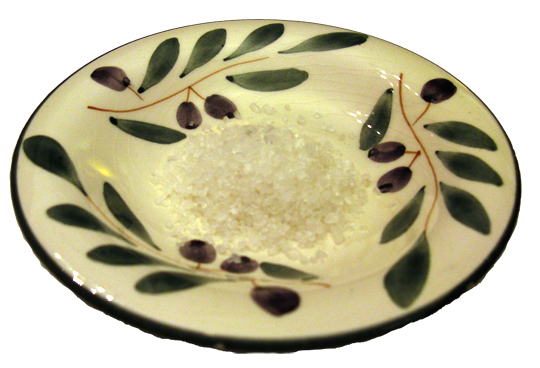
Salt Bowl

Salt Bowl

We use salt to represent Earth on our altars. Salt is sodium crystals, and crystals represent Earth. Therefore, Wiccans see salt as feminine.

We balance our altars with salt as Earth energy. As mentioned in a previous post, we also mix salt with water to make our holy water. Salt is a natural cleanser and preserver.

Our ancestors applied salt to cure their meat and it functioned as the first preservative people employed. (And we still use it today.) Early people didn’t understand it at the time, but salt kills a lot of bacteria we come into contact with and so it prevented meat from spoiling.

So holy water purifies because it has salt in it. We sprinkle holy water to get rid of unwanted energies and entities. We mix three pinches of salt into our blessed water to make a salt-water solution. This blessed solution is then used to bless and cleanse other things and even people.

So this is how we use salt on our altar.

In the next post we will talk about air.

I wish you a blessed day.

Blessed be,

Moonwater Silverclaw

Sabbats – Mabon

Happy Mabon!

Stop Sign

Stop and Tell Me What You Did Today!

Mabon is a time of balance between light and dark. It is the autumn equinox when the days continue to grow shorter and the dark begins to take over the light. With the nights becoming longer, the power of the God is waning.

As the second of the three harvest festivals of the year, Mabon is also known as the witches’ thanksgiving. We give thanks to the God and Goddess for all the bounty and sacrifices they have made for us. On this Sabbat we have friends and family over for a meal of thanksgiving. Foods that are in season at this time of year make great dishes for the feast. Enjoy bread, corn, squash, other autumn vegetables. Don’t forget wine, beer, and mead.

Some witches pour some blackberry wine on the ground as a sacrifice to the Gods. This ritual gives us hope of keeping the God alive until Samhain, when the God makes the willing sacrifice to keep us alive.

What did you do for Mabon this year? Share your experiences of the day with me here in the comments.

Blessed Be,

Moonwater Silverclaw

The Tools of Wicca: The Working Candle

In the last post we talked about water and what it represents. Now we will continue with fire.

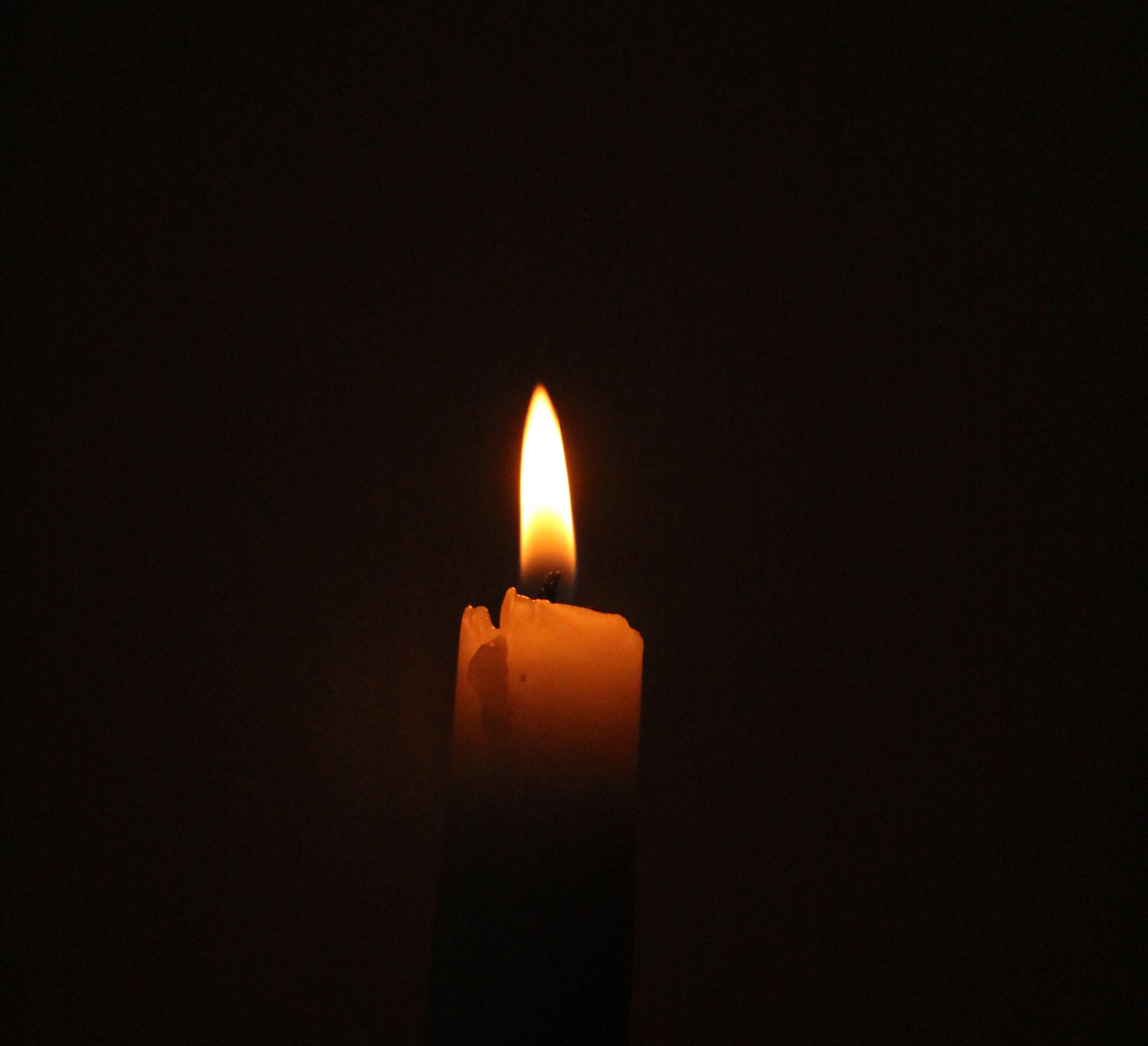
Working Candle

Working Candle (photo by Arthur)

Fire is the spark of life! As a masculine element, fire is included as the flame of the lit candle on our altar. We light this candle, known as “the working candle,” first. Then we use the working candle to light other objects such as incense or other candles. The other candles have their own specific uses, and we do not work with their flames.

In the next post we will be discussing salt. So see you next time.

Blessed be,

Moonwater Silverclaw

The Tools of Wicca: The Cup or Chalice

Merry Meet and welcome. Last time we talked about the athame. Today we will talk about the chalice or cup.

The Cup

The Cup

The cup is an important tool, and it can be made of just about anything. Glass, metal, or even wood. Since plastic usually does not hold a magickal charge, we tend to avoid using that material. (I spell magick with a “k” at the end to distinguish it from stage magic which is just slight of hand.

Usually we pour wine into the cup, but, you can substitute juice if you do not drink alcohol. Some people are allergic to alcohol or simply choose not to drink it and that is fine.

After we’ve poured wine in the cup, we use a ceremony to bless it. After that, we pour a portion of wine into a small bowl as a libation to the Gods. We then exclaim, “To the Gods.” After that, we drink the wine from the cup.

If your ceremony includes more than one person, (if you’re not practicing as a solitary), the cup is passed from one person to another while saying: “May you never thirst.” The person, who receives the cup, replies, “Blessed be.”

In my next post, I will discus the water bowl. Hope you have a great day!

Blessed Be,

Moonwater Silverclaw

The Tools of Wicca: The Athame

Merry Meet. In my last post we discussed a little about what Wicca is. Now, lets discuss how it is practiced.

How do I practice Wicca?

We as Wiccans attune ourselves to the seasons and use the Sabbats as one of those tools to help us do so. I will be discussing the Sabbats later. I think you should know about the tools first, so let’s talk about the tools we use to help us practice the craft. We will start with the athame.

Tools

The Athame

The Athame

One of the most used tools in Wicca, the athame is a ritual dagger that we use to channel and direct energy. It is used to bless and consecrate other tools, such as the elements on our altar, which we will also discuss later.

The athame (as you can see above) usually has a black handle. It has a double edged blade. One of the most important things about the athame is that it is NOT used to cut physical objects. You never cut physical objects with it. That is what the boline is used for. We will discuss the boline later, too.

The athatme is used to channel the energy you raise to where you need it to go. This could be sending energy to bless something or in some cases even casting a circle. However some covens use the sword for that purpose. Yes, some Wiccans use a sword in their rites. The sword is just like a large athame.

The athame is generally held in your dominant hand, because, this is usually the hand most people use to “push” energy out of. So pushing the energy out and directing it with the athame is the natural next step. Each tool can either represent the masculine or the feminine. The athame is a masculine tool.

In the next post I will discuss the cup or chalice.

Blessed be

Moonwater Silverclaw